How to Pass Facebook Ad Review: A Guide to Creating Policy-Safe Creatives 😉
Forget the playbooks from 2023–2024. 🙅♀️ In 2026, Facebook ad review has changed fundamentally. It is no longer just about detecting banned words. Meta now uses AI to analyze virtually everything that appears in a creative.
Facebook’s systems can break down individual visual elements, detect partially hidden objects through computer vision, and compare new ads against patterns associated with creatives that have already been rejected. If your creative closely resembles gray-hat approaches that have already been heavily used, it may get rejected during the initial review.
Today, a “safe” creative is content that looks almost indistinguishable from a regular post by a real person and does not stand out in the feed.
In this guide, we’ll break down how Facebook’s review systems work in 2026 and how to create creatives that are more likely to pass review without issues.
How Facebook Ad Review Works in 2026
In this section, we’ll look at how Facebook ad review works in 2026 and why the old ways of getting around automated checks are no longer as effective.
We’ll cover what Meta’s systems pay attention to during the initial automated review and when a human reviewer may become involved. Understanding this makes it easier to approach creative production deliberately instead of simply hoping an ad gets approved.
AI and Computer Vision: How Meta Detects Hidden Elements
To understand how Facebook detects problematic creatives in 2026, you need to keep one thing in mind: moderation is no longer limited to basic text analysis.
Meta uses advanced computer vision models trained to identify patterns associated with violations of its advertising policies.
The system does not simply “look” at an image. It processes the creative through several layers of recognition.
- 🔍 Object detection. If you try to cover slot machines, stacks of cash, or a bottle of pills with transparent elements, AI can still recognize the geometry of the object. Familiar contours may still be detected even when filters or overlays are added.
- ✍️ OCR and text recognition. Attempts to replace letters with symbols, such as “g$mbling,” or hide meaning behind euphemisms are far less effective in 2026. AI analyzes the meaning of the full phrase and compares it with visual cues. If an image contains a roulette-style wheel while the copy says “claim your bonus,” the system can immediately associate the two with gambling-related content.
- 😀 Faces and emotional expressions. Gray-hat creatives often use characters with exaggerated emotions, such as extreme excitement or shock. AI models are trained to recognize these patterns as well. If an overly excited facial expression appears alongside a strong call to action, the system may treat it as a higher-risk ad.
Affiliates used to rely heavily on overlays, frames, and semi-transparent layers to confuse automated review. Today, Meta’s computer vision can identify much of what sits underneath those elements.
Simply placing a banner or graphic over restricted imagery is no longer enough. The system may still recognize the contours through contrast, composition, or other visual information preserved in the file.
Another major issue for media buyers is Meta’s historical ad database.
The platform has accumulated billions of creatives that have already been rejected or removed. Facebook does not need an exact pixel-for-pixel match to recognize similarities.
If a new image looks too similar to a previously rejected creative in terms of colors, composition, or object placement, it may be rejected during the initial review.
Two Layers of Review: Automated vs. Human
Facebook ad review generally works in two stages: automated checks first, followed by human review in some cases.
The initial review is handled by automated systems. Meta analyzes metadata, looks for restricted objects using computer vision, and compares the creative against patterns associated with previously rejected ads.
If the system does not detect any obvious violations, the campaign may be approved ✅ and begin delivering.
A human reviewer may become involved later and does not review every campaign. This usually happens after a sharp increase in spend, a high number of user complaints, or additional risk signals associated with the ad account.
The Psychology of a “Safe” Approach: From Gray-Hat Verticals to White-Hat Presentation
The main idea is to make the ad look like regular user-generated content. Instead of advertising the offer directly, media buyers shift the focus toward a neutral story that does not formally violate platform rules.
This can help campaigns stay live longer and reduce the likelihood of triggering manual review. Here are a few specific examples.
🎰 Gambling Through Lifestyle and Success Stories. Instead of showing casino interfaces and slot machines, creatives focus on everyday situations. A person may be sitting at home with their phone, driving somewhere, or filming themselves in the kitchen while talking about paying off a loan, clearing debt, or simply having a lucky streak.
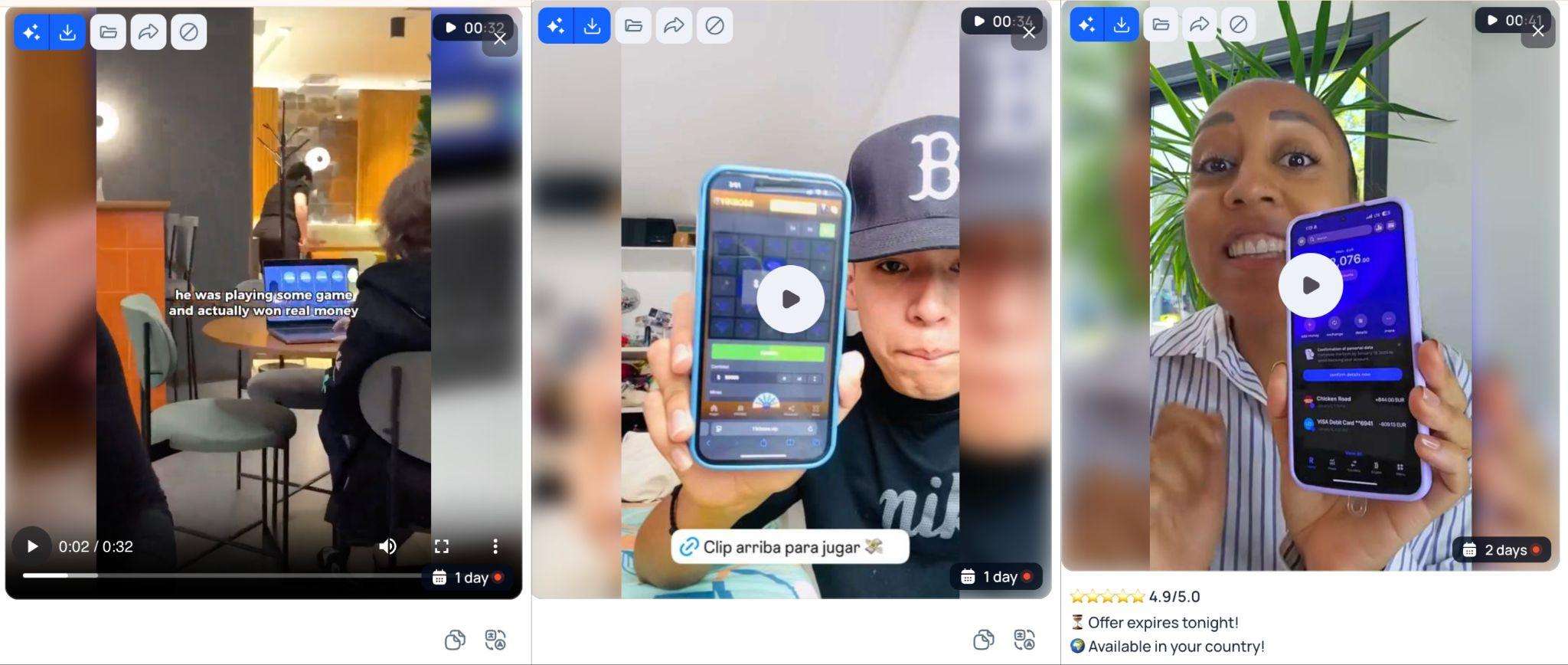
The same approach can be built around buying electronics, traveling, or recording a casual story-style video.
Visually, this type of content looks much closer to ordinary lifestyle UGC and does not resemble a direct gambling ad, so it may attract less attention during the initial review.
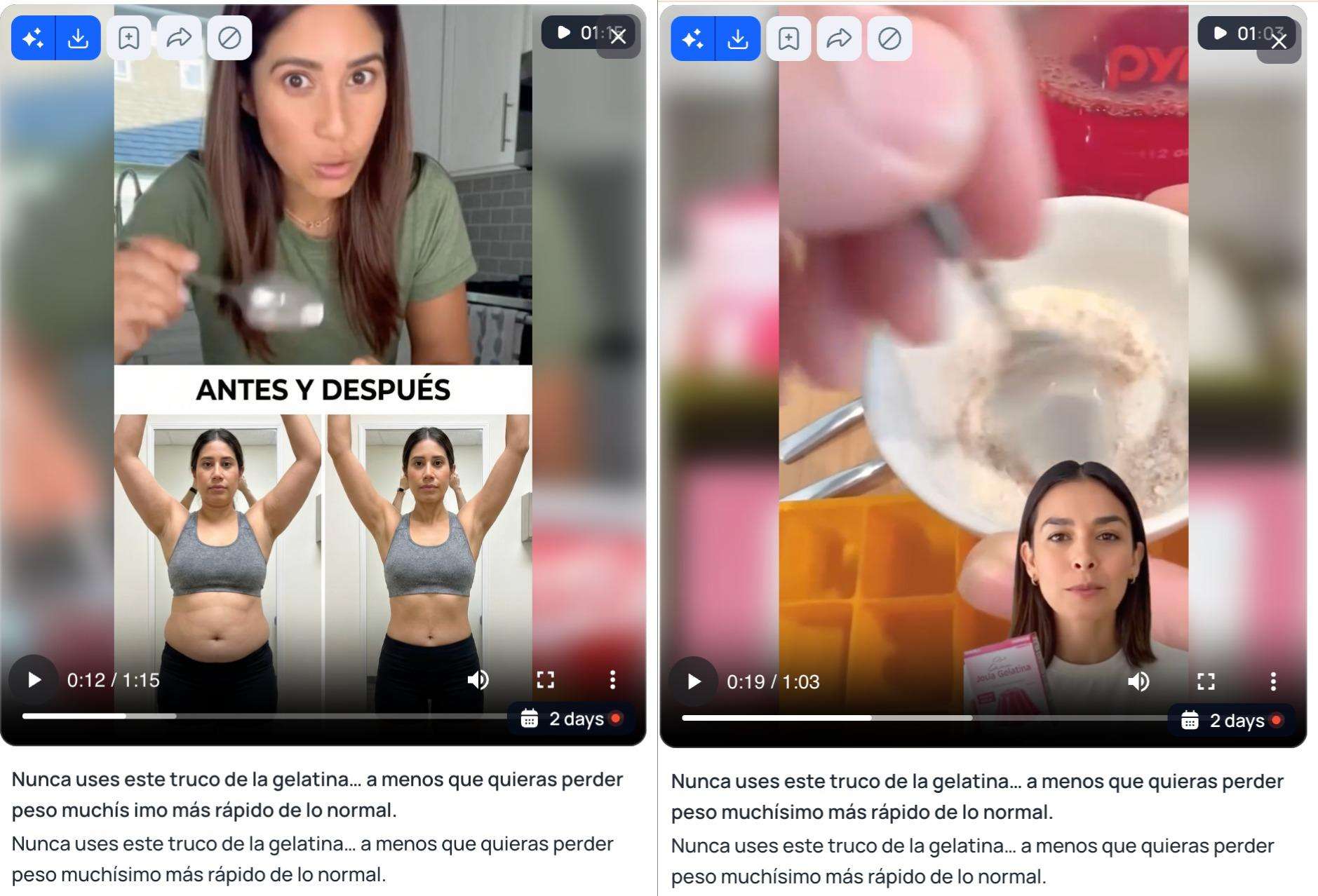
💊 Nutra Through “Healthy Habits”. In nutra, instead of promising to lose 10 kg or fix back pain in one day, media buyers increasingly build creatives around everyday routines.
Common approaches include unboxing a package of vitamins or adding supplement powder to a smoothie in a gym setting.
The product is presented as part of a healthy lifestyle rather than as a medical solution. From a computer vision perspective, this looks much closer to regular wellness content and contains fewer obvious medical-policy triggers.
Technical Creative Uniquification: How to Make Files Less Recognizable
For Facebook, every creative is also a collection of digital data.
If you upload a file that is structurally too similar to something already associated with rejected content, the campaign may fail the initial automated review. The algorithms do not look only at the file hash. They can also analyze the visual structure of the image or video. 👀
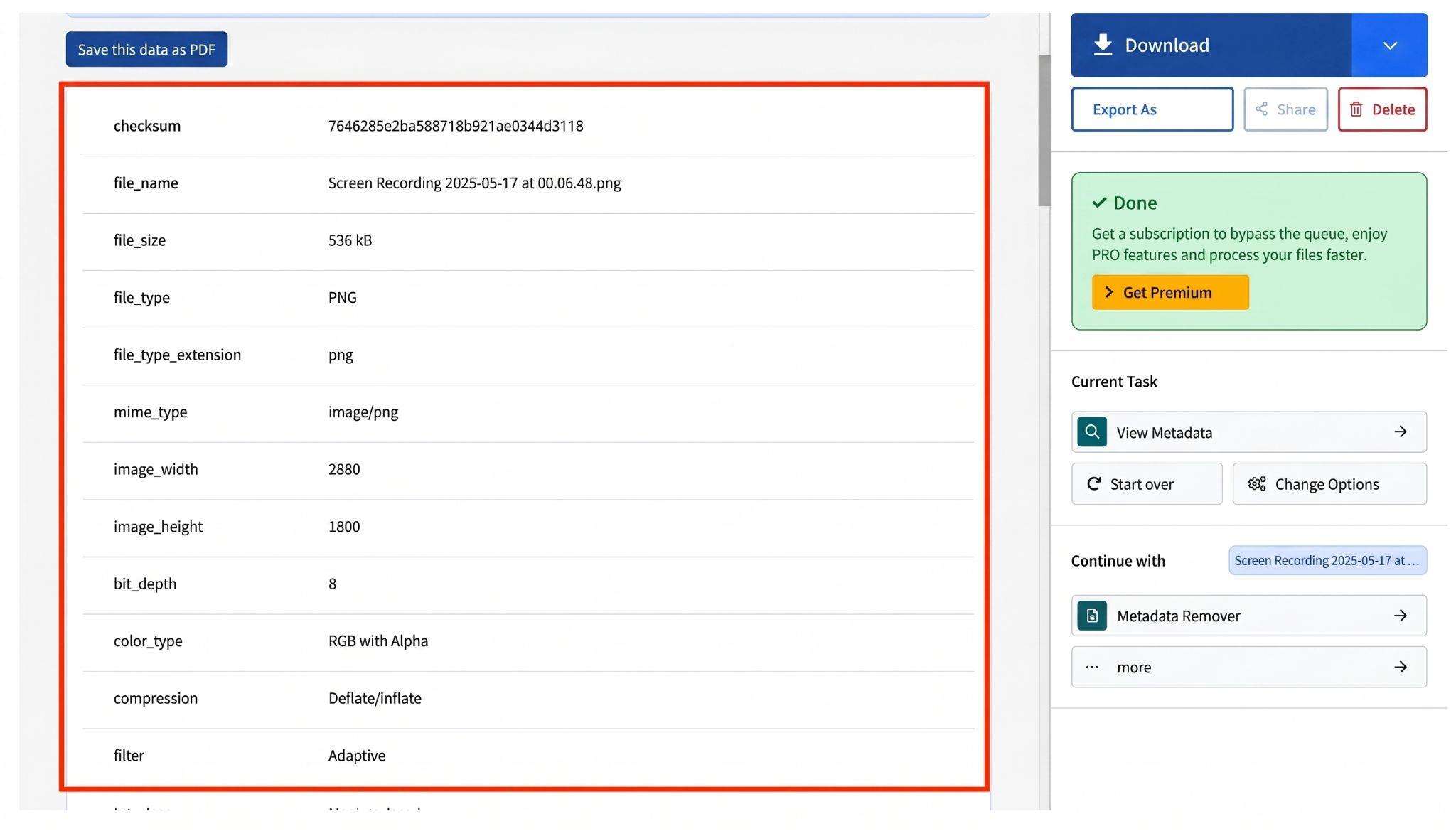
☝️ Working With EXIF Metadata. EXIF metadata can contain information such as the device model, recording date, and location data.
In the past, affiliates often removed metadata entirely. In 2026, some media buyers treat a complete absence of EXIF data as an additional risk signal and prefer to modify or replace metadata rather than simply strip it. However, changing metadata alone does not make the actual visual content unique.
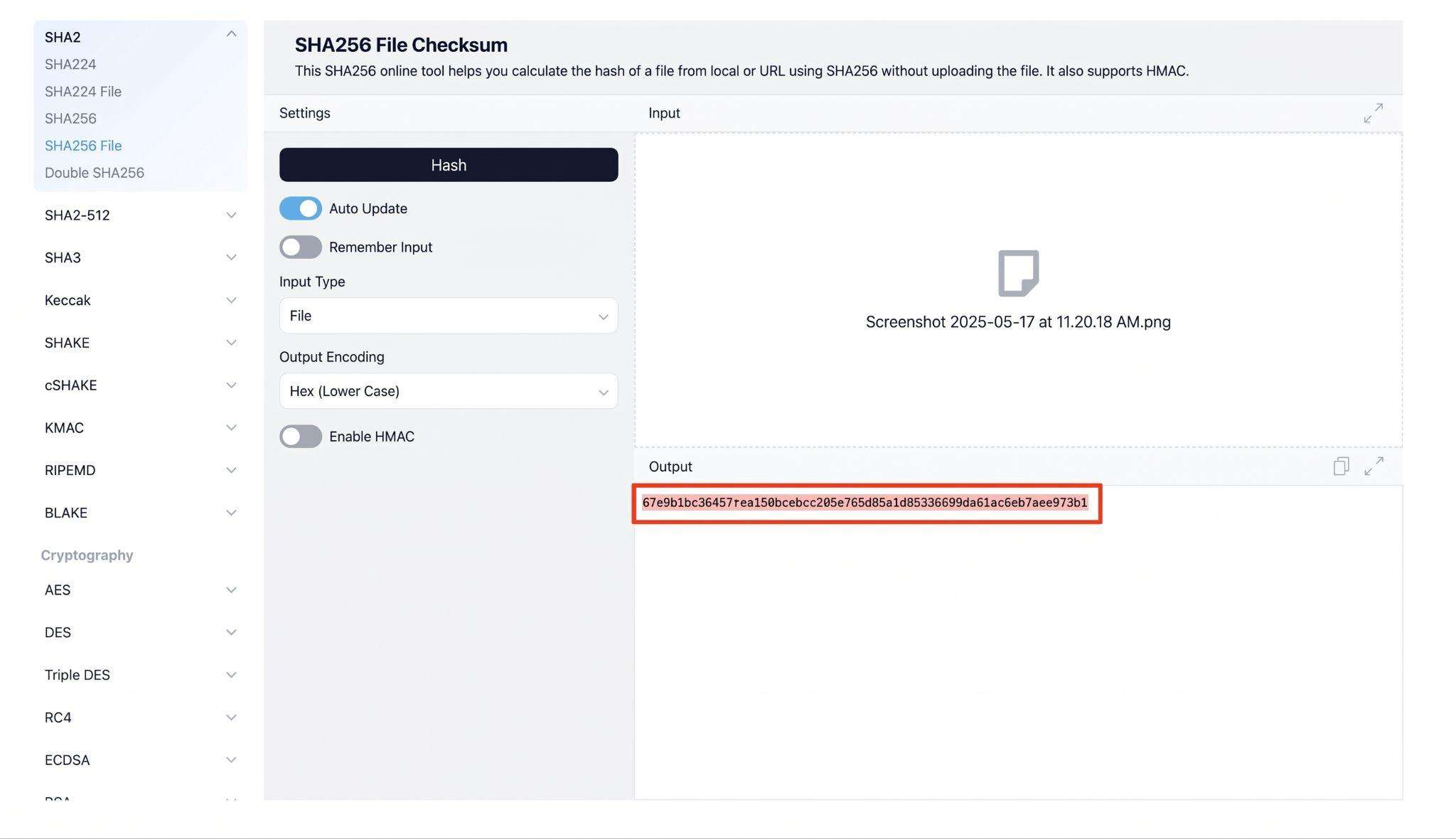
🔃 Changing the File Hash. A file hash changes whenever the underlying file changes, for example after modifying bitrate, resolution, or format.
But basic hash-changing tools are much less effective today because Meta’s systems can analyze the image or video itself, including objects, faces, text, and their relative positions.
To make a creative less similar to previously used assets, media buyers also modify the visual structure of the file:
- Frame rate and duration. Changing the frame rate, for example from 30 to 29 fps, or trimming the beginning or end of a video by even a small amount creates a technically different file.
- Distortion and orientation. Rotating a video by 1–2 degrees, applying a slight zoom, or mirroring it changes the geometry of the objects in the frame.
- Dynamic effects. Adding noise, light leaks, dust, or other overlays with moderate transparency changes the pixel structure. Brightness, contrast, and saturation can also be adjusted.
- Audio track. Audio is analyzed separately as well. Slightly speeding it up, slowing it down, or adding background noise changes the track.
In 2026, relying on ready-made online uniquification tools is risky. First, you do not control exactly which parameters are changed. Second, the same tools are used by large numbers of affiliates, so their output can become repetitive and easier to recognize.
Manual editing in CapCut or InShot gives you much more control over bitrate, filters, framing, and metadata.
Ad Copy: Trigger Words and How to Rephrase Them
Facebook reviews ad copy alongside the visual. More importantly, the system does not necessarily evaluate individual words in isolation. It looks at the overall meaning: what the ad promises, what it implies, and how the message is presented.
That is why ads are often rejected not because of one specific term, but because the wording looks like pressure, a guaranteed result, or direct manipulation. One important point is that Meta does not publish a universal list of banned words.
Affiliates usually build their understanding through repeated rejections, manual reviews, and patterns observed across different verticals.
💰 Crypto and Finance. In crypto, one of the biggest triggers is the promise of returns. Facebook is especially sensitive to wording around profit, investment, passive income, and risk-free earnings.
Even phrases that look neutral at first can cause issues if the overall message clearly reads as “put money in and make money back.” For that reason, copy in this vertical is usually shifted toward an educational or product-focused angle.
Creatives emphasize technology, tools, interfaces, and platform functionality rather than direct profit claims.
💊 Nutra and Health. In nutra, wording plays an especially important role. Any references to diagnoses, treatment, or guaranteed outcomes can lead to rejection. Facebook also pays close attention to copy involving weight loss, pain, diseases, and mental or emotional states. If an ad reads like a direct medical promise, it is much more likely to trigger additional review.
That is why nutra copy should avoid direct guarantees. Do not say that the product treats a condition or solves a problem instantly. Instead of: “Can’t lose weight?” a more neutral angle would be: “How I got back in shape.” The way the message is framed matters just as much as the words themselves. The copy should not pressure the user or directly point out their shortcomings.
The more carefully the problem is presented and the less directly it is stated, the better the chances of passing review without issues.
In gray-hat verticals, direct wording is usually replaced with more neutral phrasing so that the user still understands the message while the ad contains fewer obvious policy triggers.
| Vertical | High-Risk Wording | More Neutral Alternatives |
| Finance / Crypto | Make money, Buy, Bitcoin, Passive income, Loan, Guaranteed | Income generation, Purchase, Payouts, Asset management, Financing |
| Nutra | Diet, Weight loss, Fat, Lose weight, Disease, Treatment | Body goals, Getting in shape, Healthy habits |
| Gambling / Betting | Casino, Jackpot, Fast money, Win, Risk-free bets | Bonuses, Large rewards, Gameplay, Proven approach |
Ad Format Tricks
In this section, we’ll look at several approaches affiliates use when running gray-hat verticals on Facebook. ☑️
Carousel Ads: A Neutral First Card, Gray-Hat Creatives After It
This approach is straightforward. When creating a carousel ad, the first card uses a neutral image or video that is unlikely to raise questions during review, while the following cards contain the gray-hat creatives for the target offer.
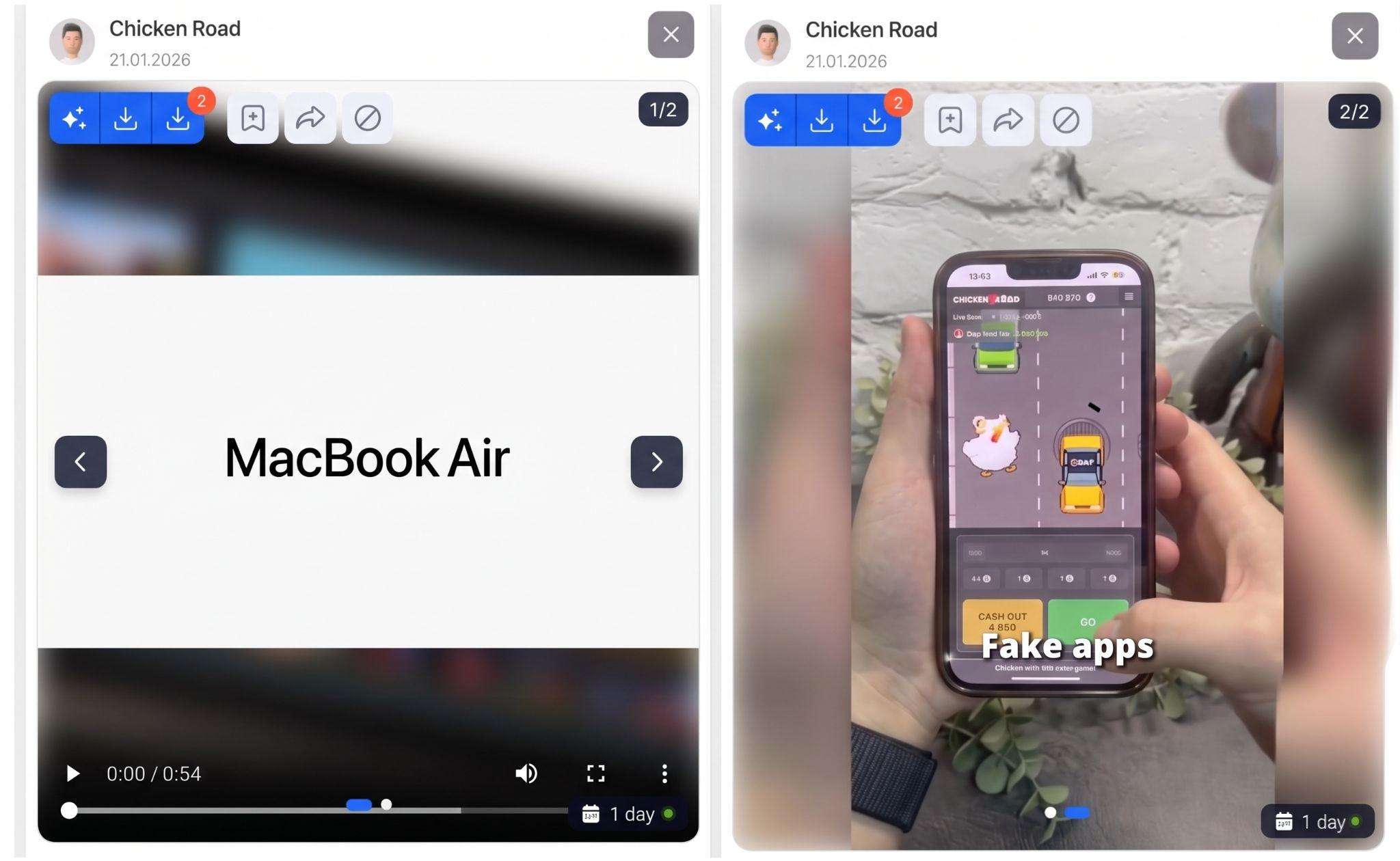
The idea is to make the first impression of the ad look as neutral as possible while keeping the actual target messaging in later cards.
Dynamic Creatives: Mixing Neutral and Target Assets
Facebook’s Dynamic Creative setup allows advertisers to combine several images, videos, headlines, and primary-text variations inside a single ad setup.
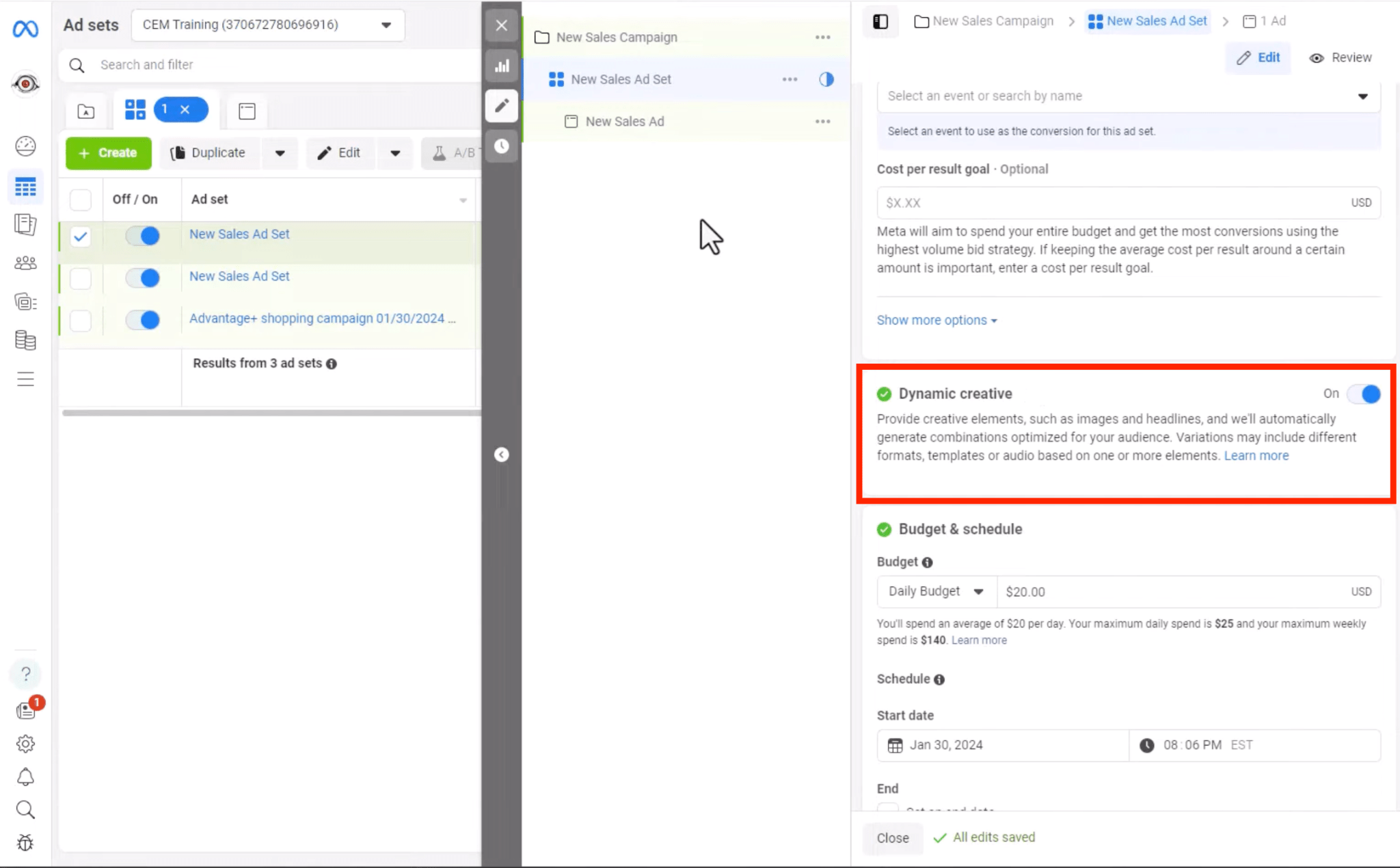
The system automatically tests different combinations and shifts delivery toward the ones that perform better. 📌 In practice, some media buyers upload both neutral white-hat creatives and the main gray-hat variation into the same ad set.
During the initial review, the system evaluates the overall ad setup and sees multiple safe-looking elements.
After launch, Meta begins testing different combinations and reallocates impressions toward the assets that perform better based on CTR, engagement, and conversions.
Other Ways Affiliates Try to Get Through Facebook Review
There are several other methods that media buyers actively discussed throughout 2025 in interviews, at conferences, and in Telegram communities. 😏
Adding Secondary Placements
Another approach involves distributing different creatives across placements. This method is often discussed in gambling 🎰, crypto 💰, and nutra 💊. The idea is to mix target creatives with neutral placeholder assets.
In practice, the campaign is created with the required conversion objective and placements are selected manually. The main placements — Facebook Feed, Instagram Feed, and Stories — receive the gray-hat creatives.
At the same time, less popular and cheaper placements are enabled, such as Messenger Inbox, Facebook and Instagram search results, Marketplace, Instagram Explore Home, or interstitial inventory. After that, the creatives in these secondary placements are manually replaced with neutral images.
As a result, the campaign sent for review contains a batch of safe-looking assets alongside one main gray-hat creative. Affiliates use this setup in an attempt to make the overall campaign look less risky during automated review.
Because these secondary placements usually receive very little spend, they may have little effect on the final CPL. Some media buyers add two or three such placements. ✅
Using Language Variations
If you use ad spy tools, you have probably seen carousel ads where the first cards look completely neutral. At first glance, they may look like ordinary e-commerce ads. But after scrolling through the carousel, you may find creatives for gambling, nutra, or other gray-hat verticals.

👍🏻 The idea is that neutral elements receive more attention during the initial review, while the main target creative attracts less scrutiny. To use this approach, advertisers go to the Languages section in Meta Ads Manager and add language variations.
First, the destination type needs to be set to Website. With other destination types, language variations may not be available. Suppose the campaign targets Spain 🇪🇸.
For the Default Language, some media buyers choose a language that is rarely used in that GEO, such as Vietnamese or Armenian.
That version can contain a link to a mainstream marketplace such as Amazon or eBay and a neutral product image, for example socks, a T-shirt, or another ordinary e-commerce item.
After that, the target language — Spanish, in this case — is added separately. The main creative for the gray-hat offer is uploaded to that language version.
At the targeting stage, the campaign remains limited to the intended GEO. Any automatically added or alternative regions are removed so delivery stays within the selected market.
The result is a campaign containing several language versions. The neutral version leads to a mainstream destination, while users with the target interface language see the localized version containing the main offer.Using AI to Generate Fresh Creatives
One reason creatives get rejected faster today is that Meta has accumulated a huge database of visual patterns. Its systems can compare faces, interiors, and individual objects with content that has already appeared in ads.
If an image looks too similar to a creative that has already been heavily used, it may attract additional attention. When people talk about passing Facebook review, they often focus on whether a creative looks polished.
In practice, another important factor is whether the image or video already has a history. 🙂↔️ This is where generative AI becomes useful. An AI-generated face does not belong to a real person and may never have appeared in advertising or user-generated content before.
The same applies to generated locations: interiors, streets, rooms, and backgrounds that do not exist in the real world and therefore have no previous campaign history. There may be nothing directly comparable to them in Meta’s existing ad history.
At the same time, they can still look like regular UGC: a person holding a phone, sitting at home, or filming themselves against a neutral background.
Generative AI therefore solves two problems at once: it reduces repetition and makes it easier to create fresh visual combinations that are not simply reworked versions of old market approaches.
That can help such creatives stay usable longer 👍🏻 and reduce the chance of being recognized as recycled versions of previously used ads.
Tyver — Facebook Ad Spy
After looking at computer vision and Meta’s database of previously rejected creatives, one thing becomes obvious: launching campaigns blindly is an easy way to waste testing budget. A much more practical approach is to see what is currently getting through review and how competitors are running it across different GEOs.
That is where Tyver comes in. Tyver is a Facebook ad spy that shows real creatives that have already passed review and are running across Meta. According to the service, Tyver tracks more than 92% of all Meta ads.
Its main advantage is volume: the database grows by more than 3 million ads per day, including ads that Meta has already removed. This gives media buyers a broader picture of both creatives that stay live for a long time and ads that disappear shortly after launch.
⭐️ Let’s take a closer look at Tyver’s main features.
- Audience Filters. For EU countries, Tyver lets users filter ads by gender and specific audience age ranges. This is particularly useful in nutra. For example, you can immediately see which pain points are used in creatives targeting women aged 50+ and compare them with the angles used for younger audiences.

- Gambling Subcategory Presets for Popular Games. Tyver allows you to filter the entire ad feed down to a specific slot or crash game with a single click. The built-in list includes over 20 top-performing titles (such as Aviator, Plinko, Sweet Bonanza, Gates of Olympus, and Book of Dead), so you do not need to manually hunt for keywords across different languages.
- URL Identifier Filters. To avoid scrolling through ads from influencers and ordinary online stores, you can search for URL fragments commonly used in affiliate tracking. Examples include: pixel_id=, sub1=, utm_source=, fb=. A filter like this can remove a large share of irrelevant ads and leave more nutra, gambling, and other affiliate-style campaigns in the results.
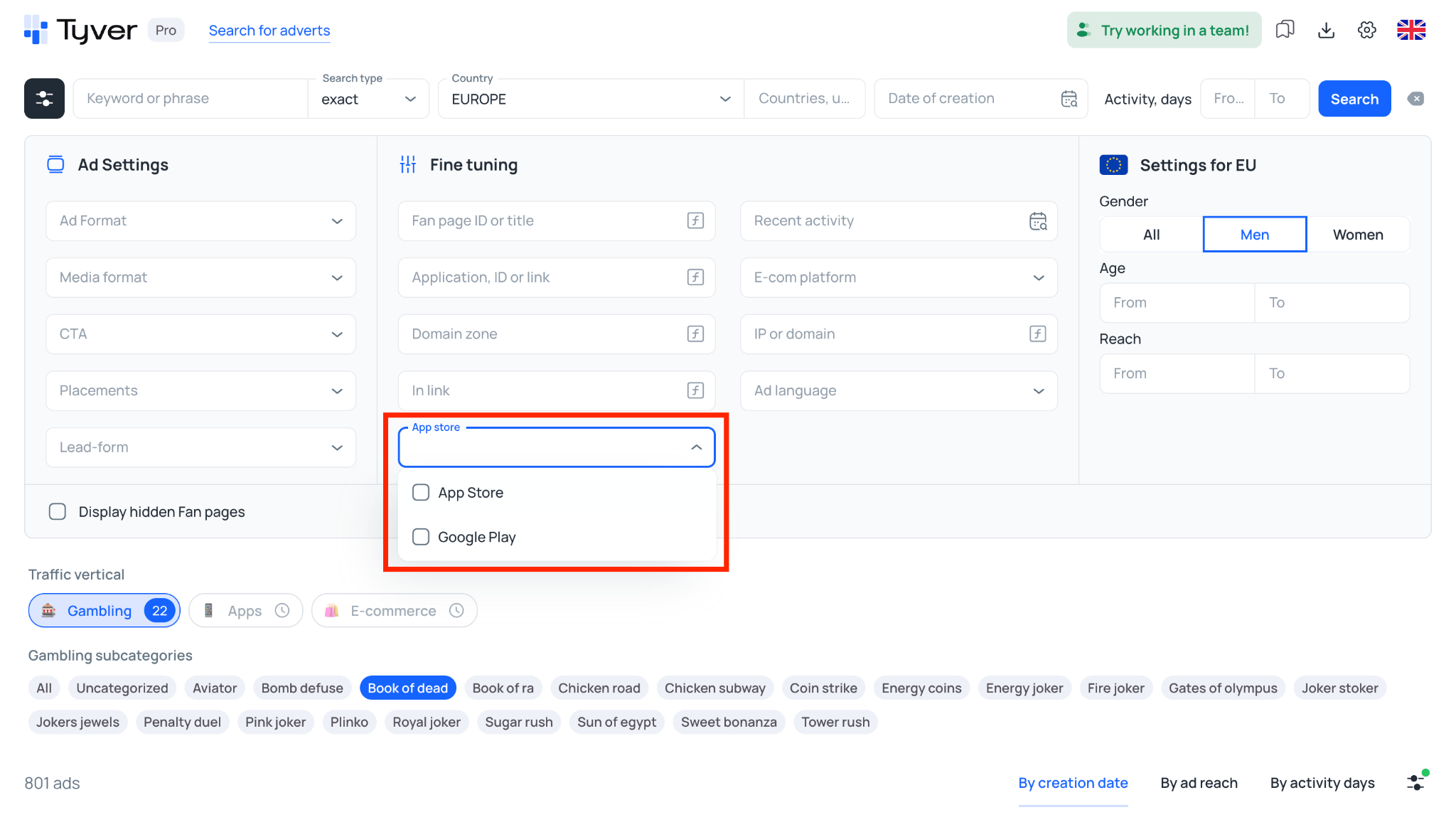
- App Store and Google Play Search. If you run traffic to apps, you can filter by App Store or Google Play. Combined with the Gambling category, this makes it easier to research current approaches for slots and crash games.
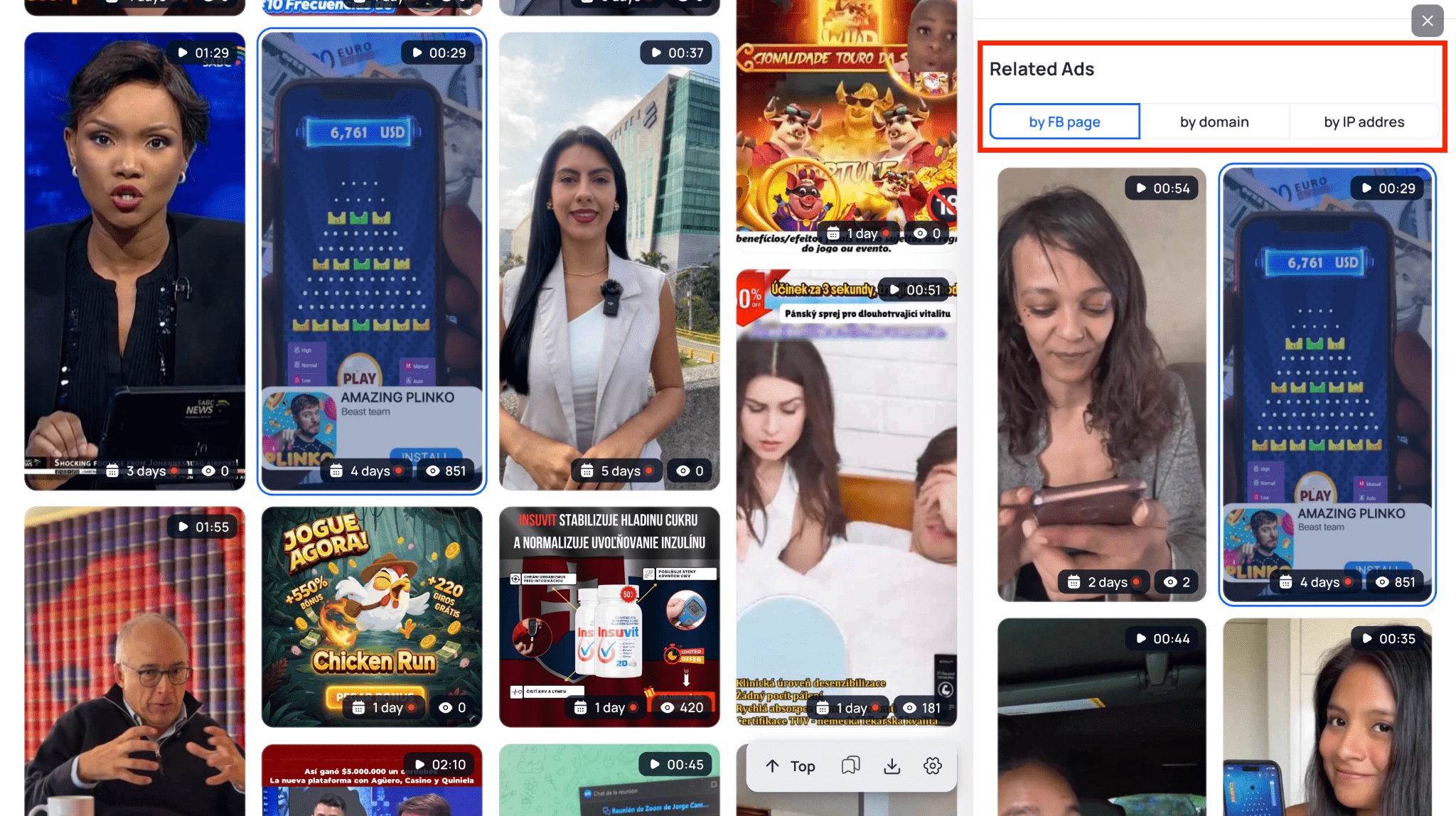
- Funnel Research by Facebook Page. If you find a promising creative, open the Similar Ads section and select By FB Page. Tyver will show all campaigns associated with the same Facebook Page. This can sometimes reveal an entire funnel, including different creative angles and links to landing pages.
- Teamwork. Tyver also includes a Team Workspace feature that makes collaboration between team members much easier. You can invite colleagues to the same workspace, share ad creatives and research results, and work together without having to duplicate searches. It’s especially useful for affiliate teams where several people are constantly looking for and analyzing winning creatives, offers, and ad campaigns.
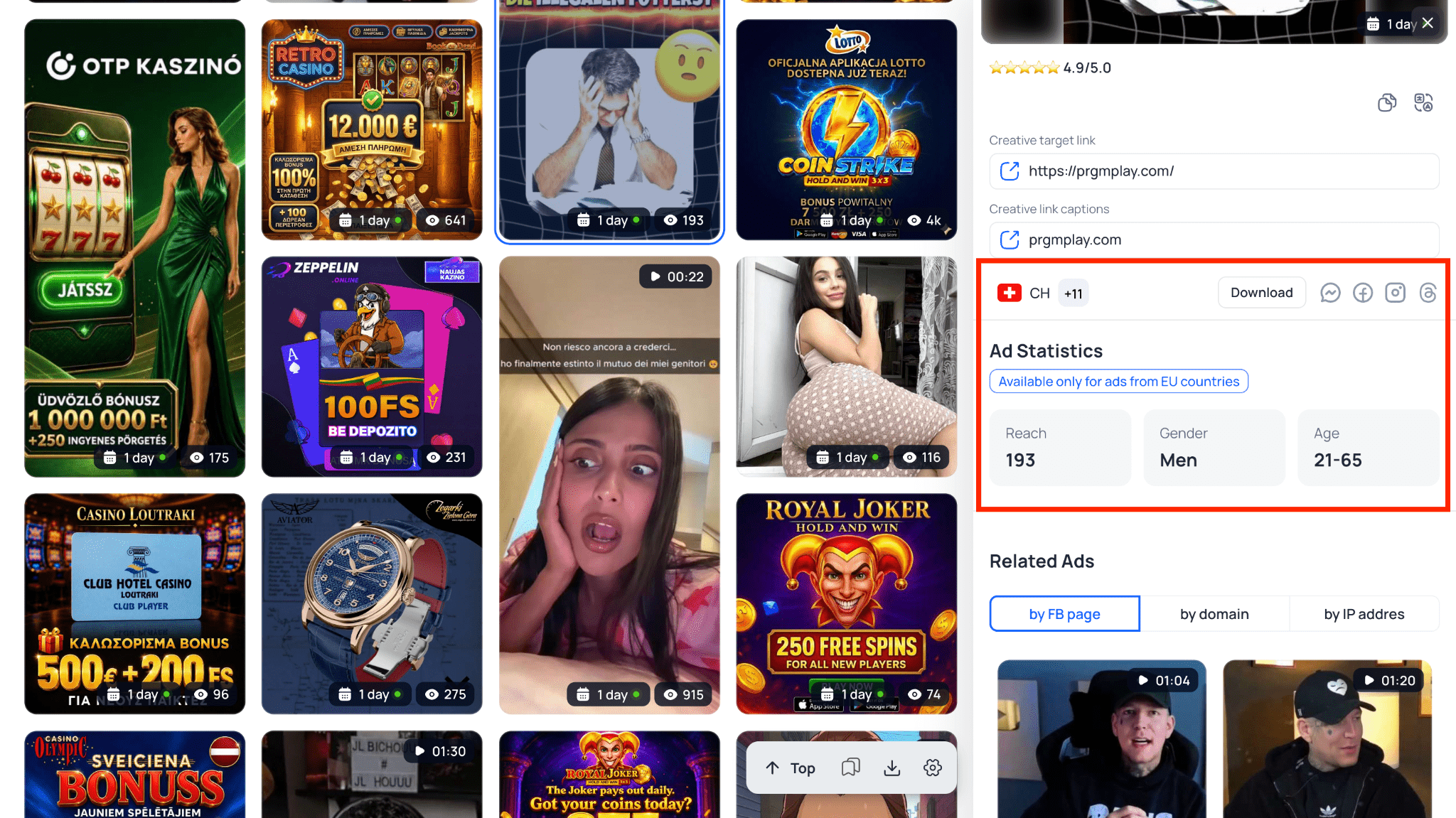
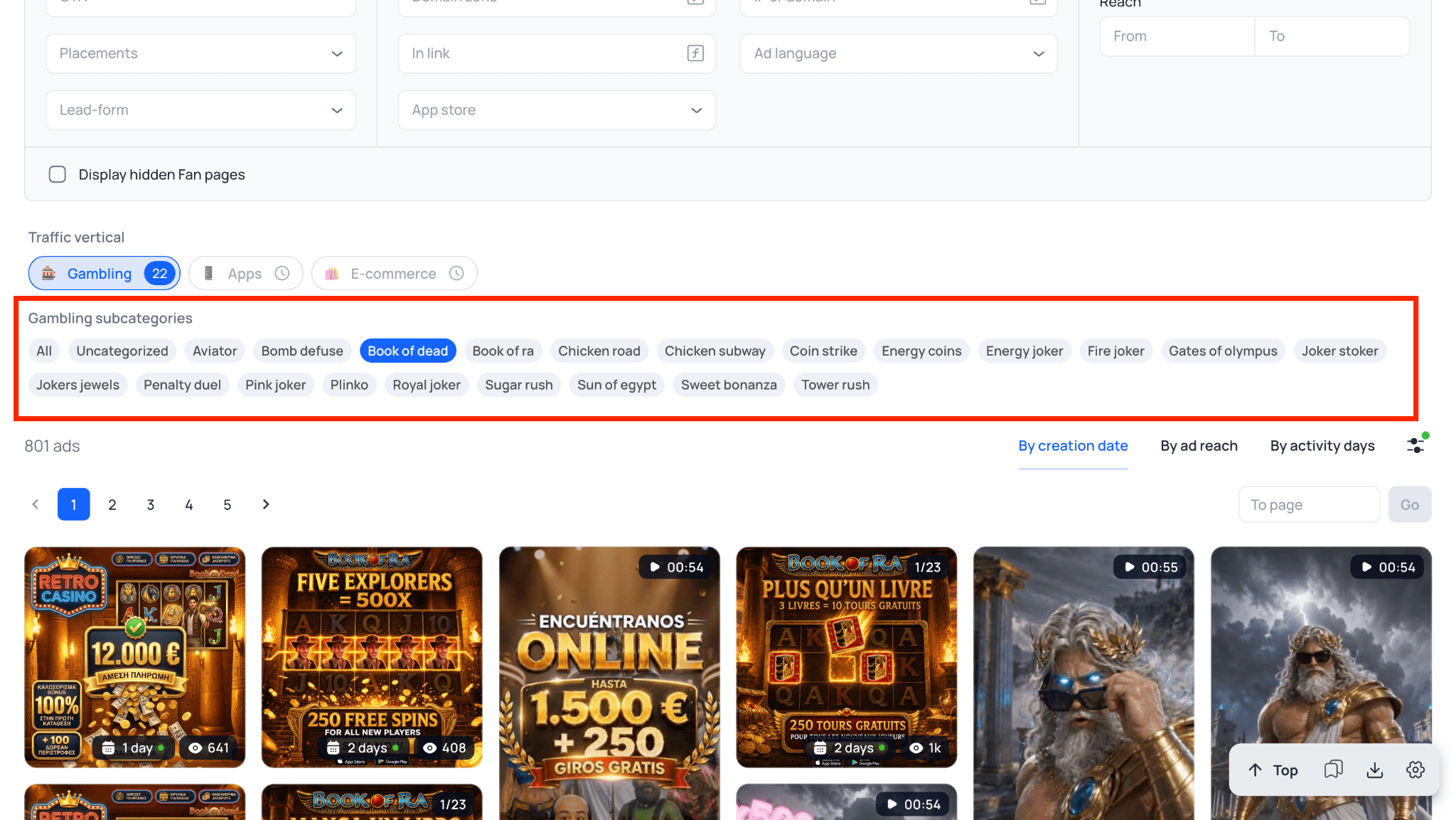
Instead of guessing what competitors are currently running or constantly reinventing the wheel, Tyver gives media buyers a way to monitor fresh affiliate campaigns in real time and save testing budget.
Final Thoughts
Getting ads through Facebook review in 2026 has become an ongoing cat-and-mouse game 🐈⬛. As soon as affiliates find a new loophole, Meta’s systems adapt and gradually close it. That means there is no single trick that will keep working forever.
What still works is constant adaptation and regularly testing new creative angles. The main takeaway is to focus on native-looking UGC. The more a creative resembles a regular post from a real person, the less it stands out in the feed.
And if you want to understand which native angles are currently getting through review and performing well, it makes sense to study live examples in Tyver. That kind of competitive research can save a significant amount of testing budget.