Top 10 Best Proxy Services for Affiliate Marketing in 2026: Scale Your Ads without Bans 🛡️
In 2026 proxies remain a core part of the infrastructure in affiliate marketing. 🛡️ Antifraud systems are becoming more sophisticated and the requirements for account quality are stricter than ever. While a standard datacenter IP might have been enough to run campaigns a few years ago, successfully managing popular traffic sources now requires much more reliable proxies.
Many media buyers try to cut costs by using free or extremely cheap proxies. But it often leads to higher expenses. Accounts with such proxies are more likely to trigger security checks and campaigns can be suspended before the start. The reason is simple: low-quality IPs often have a poor reputation, have already been heavily used by other users or are flagged by antifraud systems.
High-quality proxies reduce these risks. ✅ Reputable providers offer large IP pools, extensive geo coverage, flexible rotation options and IP addresses that are generally trusted more by traffic sources (Facebook, Google, TikTok, Bing). As a result, the choice of proxy provider can have a direct impact on your operations.
In this guide we’ll review the best proxy for traffic arbitrage in 2026, comparing their features, advantages, limitations and ideal use cases to help you choose a proxy provider that fits your goals, budget and platform.
Why You Need High-Quality Proxies for Affiliate Marketing
Proxies play a critical role in affiliate marketing. They help advertisers manage multiple accounts, access location-specific traffic sources and reduce the risk of triggering platform security systems. The quality of your proxy can directly impact account stability, campaign performance and long-term scalability.
Avoiding Antifraud Systems
Modern advertising platforms rely on comprehensive antifraud systems that evaluate dozens of signals, including IP reputation. 🔍 If an IP address has previously been associated with spam, automation or suspicious activity, the chances of additional verification, restrictions or account bans increase significantly. High-quality residential, mobile and ISP proxies for arbitrage typically have a stronger reputation and are less likely to trigger automated security checks.
Managing Multiple Ad Accounts
Affiliate marketers and agencies often operate multiple advertising accounts across different campaigns and projects. Proxies help isolate these accounts by assigning a unique IP address to each environment, reducing links between them and minimizing the risk of widespread restrictions if one account encounters issues.
Accessing Specific GEOs
Many offers and advertising campaigns target specific countries, regions or even cities. 🌎 Proxies make it possible to access websites, ad platforms and search results as local users would see them. This is particularly useful for campaign launches, competitor research, ad verification and testing offers across different geos.
Types of Proxies for Media Buying: Which One to Choose?
There are several types of proxies available on the market and each of them suits different tasks. They vary in terms of trust level, pricing, connection speed and resistance to antifraud checks. The right choice depends on your traffic source (whether you need best proxies for TikTok ads or high-quality proxy for Google Ads), budget and the requirements of your advertising campaigns. Top proxy services 2026 offer all proxy types for any use case.
- 🏠 Residential proxies for affiliate marketing use IP addresses assigned by internet service providers to real household users. Because these IPs originate from genuine residential connections, they tend to be trusted by advertising platforms. Residential proxies are commonly used for account management, account farming, launching campaigns in challenging geos and other tasks where IP reputation plays an important role.
- 🔄 Backconnect residential proxies automatically rotate IP addresses from a pool of real residential devices while using a single gateway endpoint. This helps distribute traffic across multiple IPs, reducing the risk of detection and bans.
- 📱 Mobile proxies route traffic through cellular networks and use IP addresses assigned to real mobile devices. Due to the way mobile networks operate, a single IP address can be shared by a large number of users at the same time, which appears completely natural to antifraud systems. As a result, mobile proxies are widely considered one of the most trusted options for running Facebook Ads, TikTok Ads and other sensitive traffic sources. Their main drawback is the higher cost compared to other proxy types.
- ⚡️ ISP proxies combine elements of both residential and datacenter solutions. They are hosted on high-performance servers while using IP addresses registered to internet service providers. This allows them to offer the speed and stability of datacenter proxies with a higher level of trust from advertising platforms. ISP proxies are often used for long-term work with advertising accounts and other tasks that require a stable IP address.
- 🖥️ Datacenter proxies are hosted on servers and are not associated with real devices or residential internet connections. Their main advantages include high speed, low cost and access to large IP pools. However, these proxies are generally easier for antifraud systems to identify, making them less suitable for sensitive advertising activities. They are more commonly used for automation, web scraping, data collection and other supporting operations.
Top 10 Proxy Services for Affiliate Marketing in 2026 🏆
The market offers dozens of proxy providers, but their quality, stability and pricing can vary significantly. We review the 10 best proxies for affiliate marketing in 2026, comparing their features, proxy types, pricing models and ideal use cases.
Bright Data
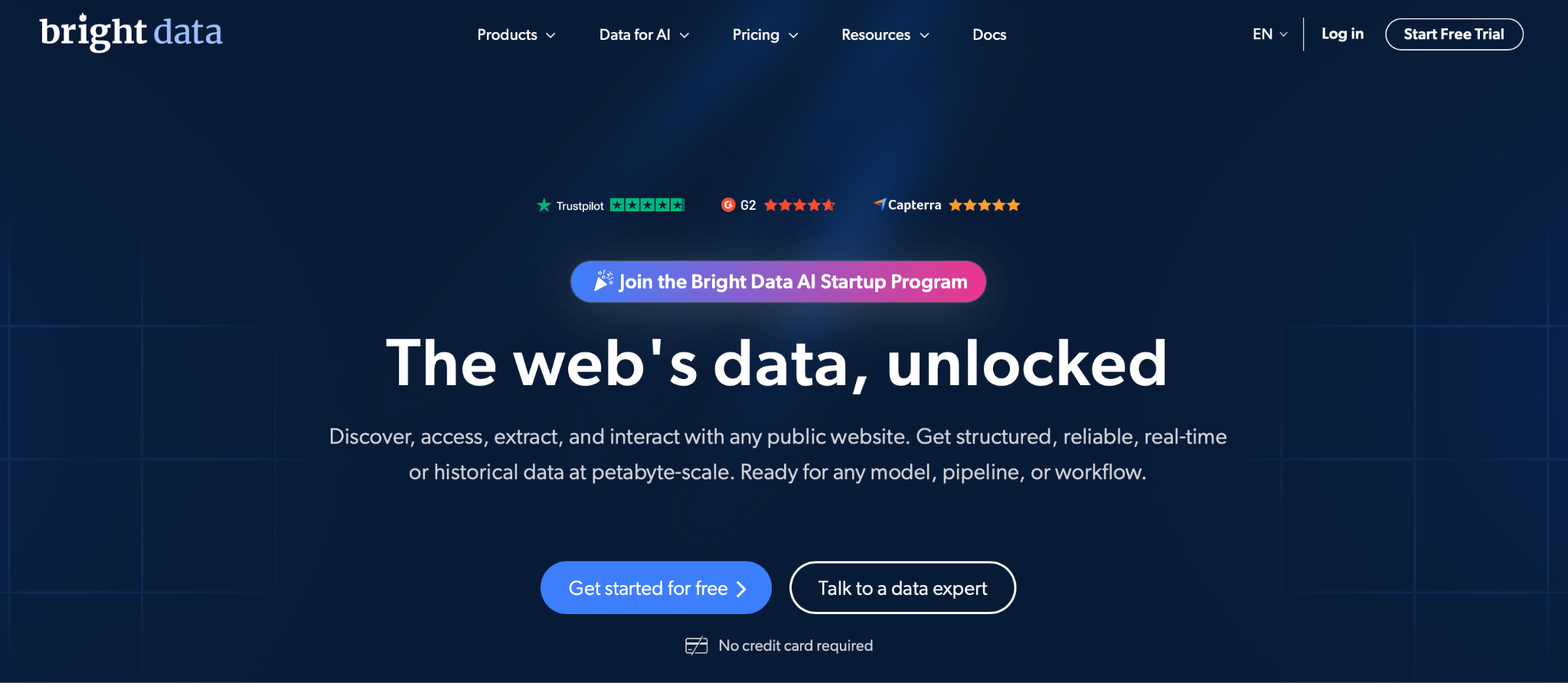
Bright Data is an enterprise-level proxy provider with a large-scale infrastructure focused on web data extraction. It offers residential and ISP proxy networks with coverage across 195+ countries and detailed geo-targeting (city/carrier level).
Pros:
- 400M+ residential IPs (really a pool of elite proxies for traffic arbitrage);
- 1,300,000+ ISP IPs (shared and dedicated pool);
- High uptime (99.99%) and stable routing.
Cons:
- Higher pricing compared to mid-tier providers;
- Not suitable for small-scale projects.
Best for: enterprise media buying and large-scale proxy operations.
Pricing: Residential proxies start from $4.00/GB (pay-as-you-go). ISP proxies start from $3.5/IP (dedicated plans).
Oxylabs
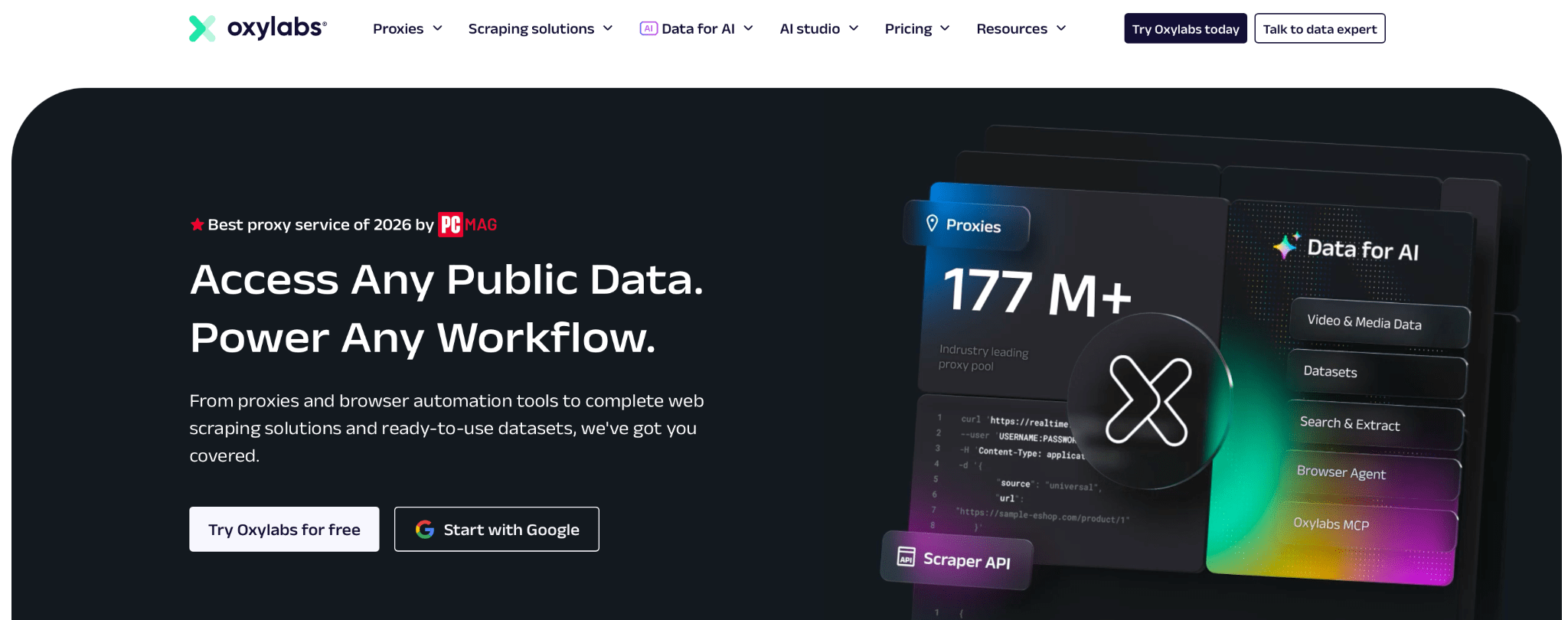
Oxylabs is a proxy and web data provider offering residential, ISP, datacenter and mobile proxies, along with scraping APIs and automation tools. The platform operates across 188+ countries and combines proxy infrastructure with tools for web data extraction, including search APIs and headless browser solutions.
Pros:
- Strong reliability and high connection speed;
- Residential proxy pool with 175M IPs;
- Large ecosystem of tools beyond proxies (APIs, scraping, automation);
- Fast response time (~0.25s).
Cons:
- Can be excessive for simple proxy use cases;
- More oriented toward enterprise scraping workflows.
Best for: large-scale data scraping, automation and enterprise media buying operations.
Pricing: Residential proxies start from $2.5/GB, ISP proxies – from $1.2/IP, datacenter – from $0.7/IP, mobile – from $3.5/GB.
Decodo (ex-Smartproxy)
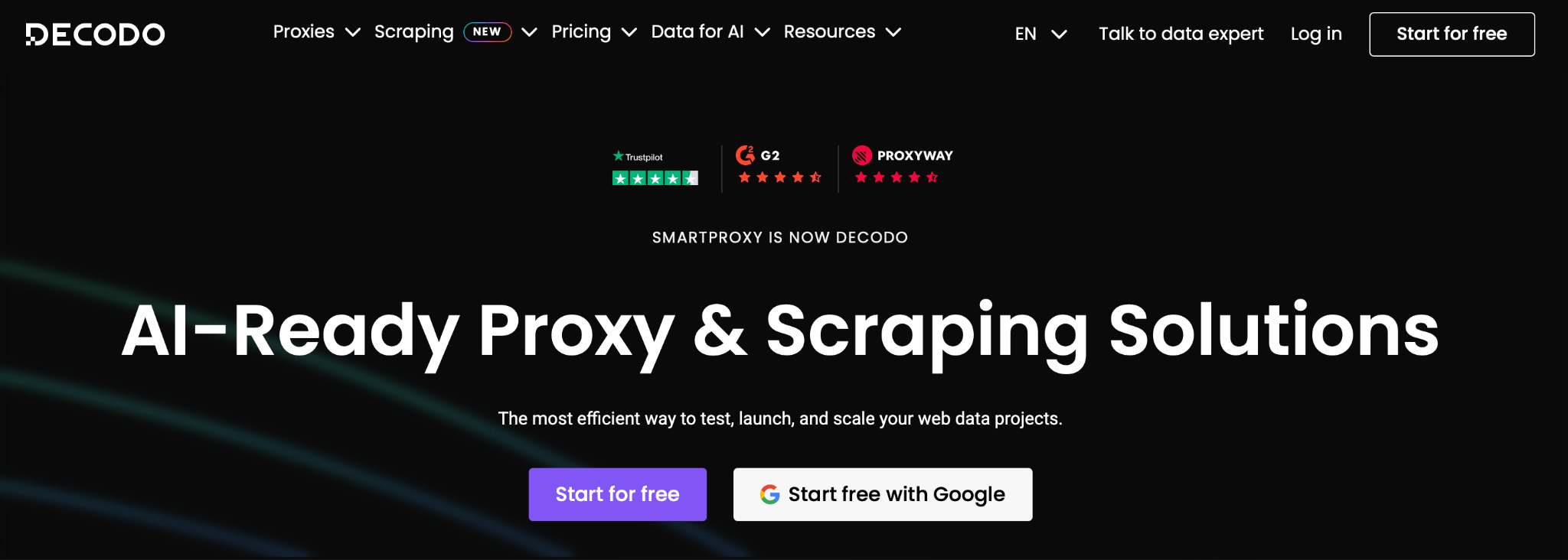
Decodo is a proxy provider offering residential, mobile, datacenter and static residential proxies (ISP) with global coverage across 195+ locations. It also provides tools for web scraping and API-based data access.
Pros:
- Large residential pool (125M+ IPs);
- Flexible pricing across different proxy types which gives best value for money spent;
- 14-day money-back guarantee;
- Built-in proxy checker for IP validation.
Cons:
- Feature set split across multiple tools;
- Can be confusing for beginners.
Best for: affiliate marketing, automation and medium-scale scraping workflows.
Pricing: Residential starts from $2/GB, static residential – from $0.27/IP, mobile – from $2.25/GB, datacenter starts from $0.02/IP.
Proxy-Seller
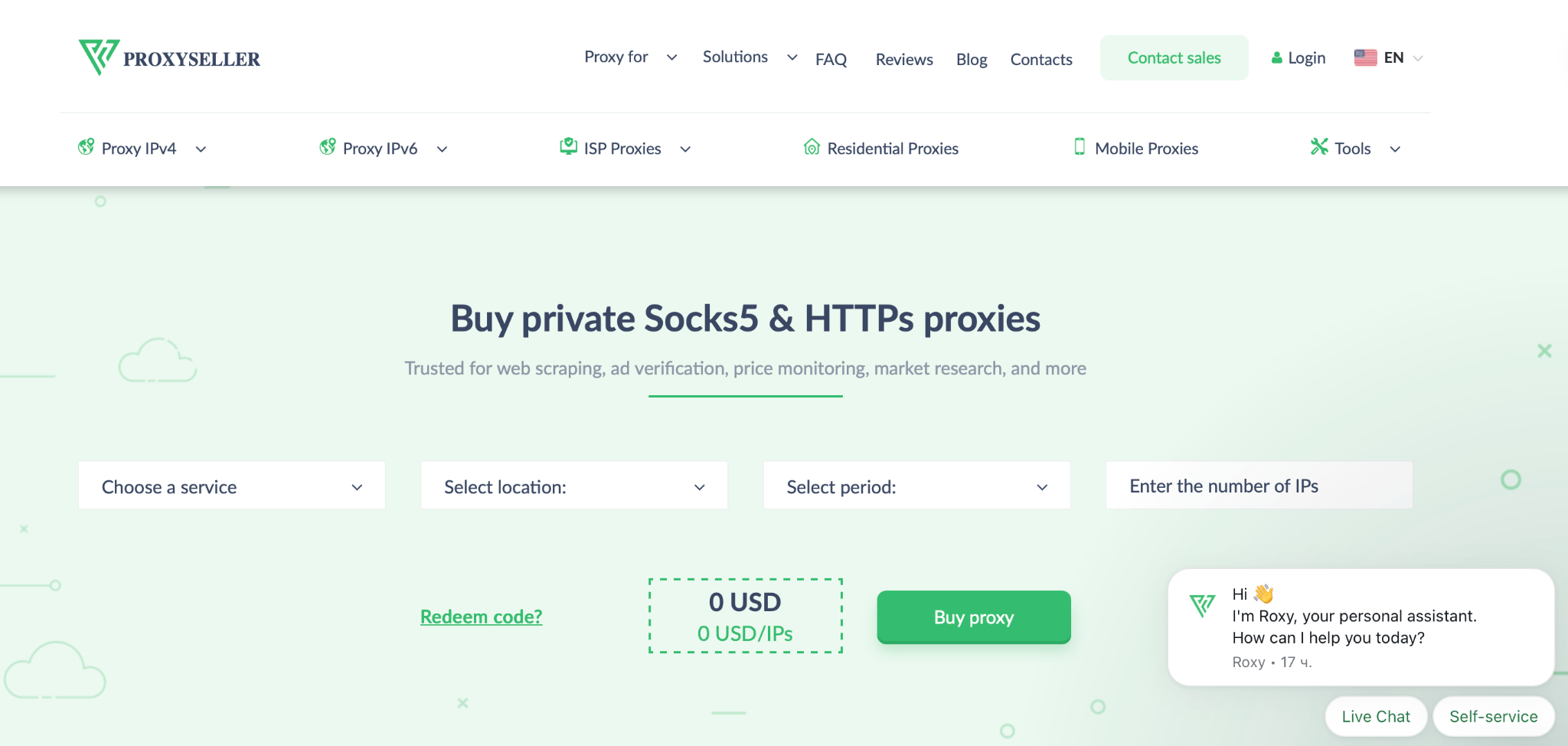
Proxy-Seller is a proxy provider offering datacenter (IPv4/IPv6), ISP, residential and mobile proxies with global coverage across 50+ locations. The service supports all basic connection protocols (HTTP, HTTPS, SOCKS5), multiple authentication methods and additional tools for proxy checking and management.
Pros:
- Wide range of proxy types and their configurations;
- Large residential pool (20M+ IPs);
- Flexible authentication (username/password and IP whitelist);
- Proxy tools like checker and scanner;
- Refund policy: 24 hours refund guarantee after order issuance;
- 24/7 support and 99% uptime.
Cons:
- Pricing varies significantly between proxy types;
- The interface of the proxy dashboard feels less user-friendly compared to other providers.
Best for: multiaccount management, affiliate marketing and general-purpose proxy operations.
Pricing: Residential starts from $1.99/500MB, mobile – from $55/IP, ISP – from $1.15/IP, Proxy IPv4 – from $0.90/IP, Proxy IPv6 – from $0.08/IP.
Swiftproxy
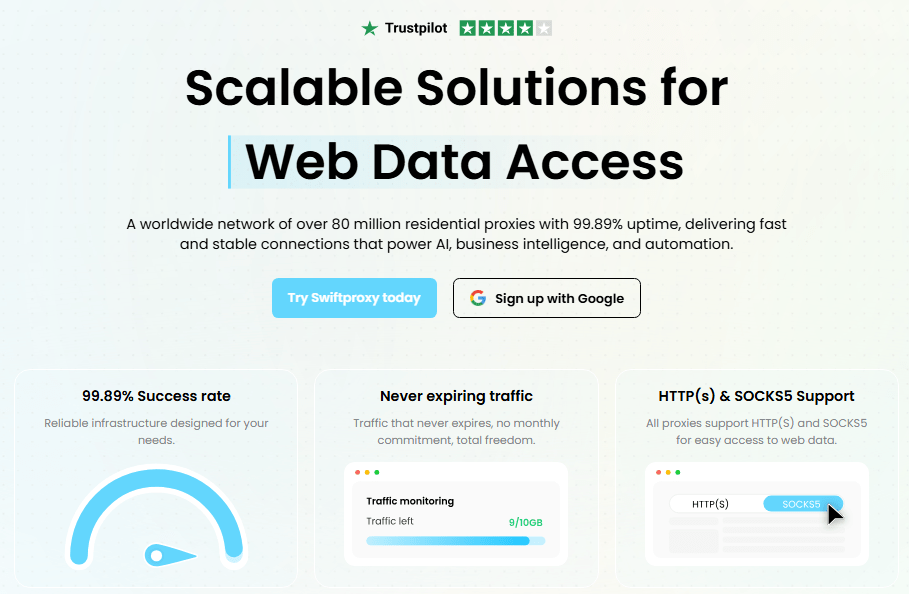
Swiftproxy is a residential proxy provider offering rotating residential proxies and static residential (ISP) proxies with coverage across 190+ countries and regions. The platform provides access to 80M+ real residential IPs, supporting HTTP, HTTPS, and SOCKS5 protocols. With non-expiring traffic, rotating and sticky sessions, and flexible geo-targeting options, Swiftproxy is designed for web scraping, browser automation, AI workflows, social media management, and large-scale data collection.
Pros:
- 80M+ residential IPs across 190+ countries and regions
- Non-expiring traffic for residential proxy plans
- Rotating and sticky session support
- HTTP, HTTPS, and SOCKS5 compatibility
- Country, state, and city-level targeting
- Free trial available for new users
- Easy integration with scraping tools, AI agents, and browser automation platforms
Cons:
- Focused primarily on residential and static residential proxies rather than a full range of proxy types
- Advanced targeting features may not be necessary for smaller projects
Best for: web scraping, browser automation, AI agents, social media management, multi-account operations, ad verification, and large-scale data collection.
Pricing: Rotating residential proxies start from $0.70/GB (traffic never expires), while static residential (ISP) proxies start from $6/IP per 30 days with unlimited bandwidth.
SOAX
SOAX is a proxy provider offering residential, mobile and datacenter proxies. The platform operates in 195+ locations and provides access to a proprietary proxy network with more than 191 million IPs. In addition to proxy services, SOAX offers advanced session management, API integration, real-time analytics and a Web Unblocker solution for large-scale data collection.
Pros:
- Proprietary proxy pool rather than resold IPs;
- Advanced targeting down to country, region, city;
- Flexible session management with sticky and rotating sessions;
- Real-time dashboard with proxy performance metrics;
- Fast human support with dedicated customer success managers.
Cons:
- More focused on scraping and parsing use cases than simple proxy rentals;
- Advanced feature set may be excessive for smaller projects.
Best for: precise GEO targeting, large-scale scraping and data-driven affiliate marketing campaigns.
Pricing: all proxy types start from $0.32/GB.
IPRoyal
IPRoyal is a B2B-focused proxy provider offering residential, mobile, ISP, datacenter and enterprise proxies. The platform operates in 195+ locations and provides access to more than 32 million residential IPs and over 4.5 million mobile IPs along with flexible targeting and session management options.
Pros:
- Affordable residential IPs;
- Non-expiring residential traffic;
- Sticky and rotating session support;
- Geo targeting down to state, city and ISP level;
- Browser extensions for Chrome and Firefox;
- Free proxy testing and verification tools.
Cons:
- Smaller proxy network compared to some enterprise-focused competitors;
- Advanced targeting features are not available across every proxy type.
Best for: budget-conscious media buyers, social media automation and location-specific campaigns.
Pricing: Residential starts from $1.75/GB, ISP – from $2.00/proxy, mobile – from $10.11/GB, datacenter – from $1.39/proxy.
NetNut
NetNut is a premium proxy provider offering mobile, datacenter, static residential and rotating residential proxies. The platform operates across 195 countries and provides access to more than 85 million residential IPs, 5 million mobile IPs and over 150,000 datacenter IPs. A key feature of NetNut is its one-hop ISP connectivity architecture designed to improve connection speed and stability.
Pros:
- Direct ISP connectivity for faster and more stable connections;
- Unlimited concurrent connections;
- City and state-level targeting;
- HTTP, HTTPS and SOCKS5 proxies for arbitrage.
Cons:
- Smaller mobile proxy pool compared to its residential network;
- Focused primarily on enterprise and large-scale use cases.
Best for: performance-focused media buying, large-scale scraping and long-running account sessions.
Pricing: Residential starts from $1.59/GB, static residential – from $3.82/IP, mobile – from $3.82/GB, datacenter – from $0.45/IP.
MobileProxy.space
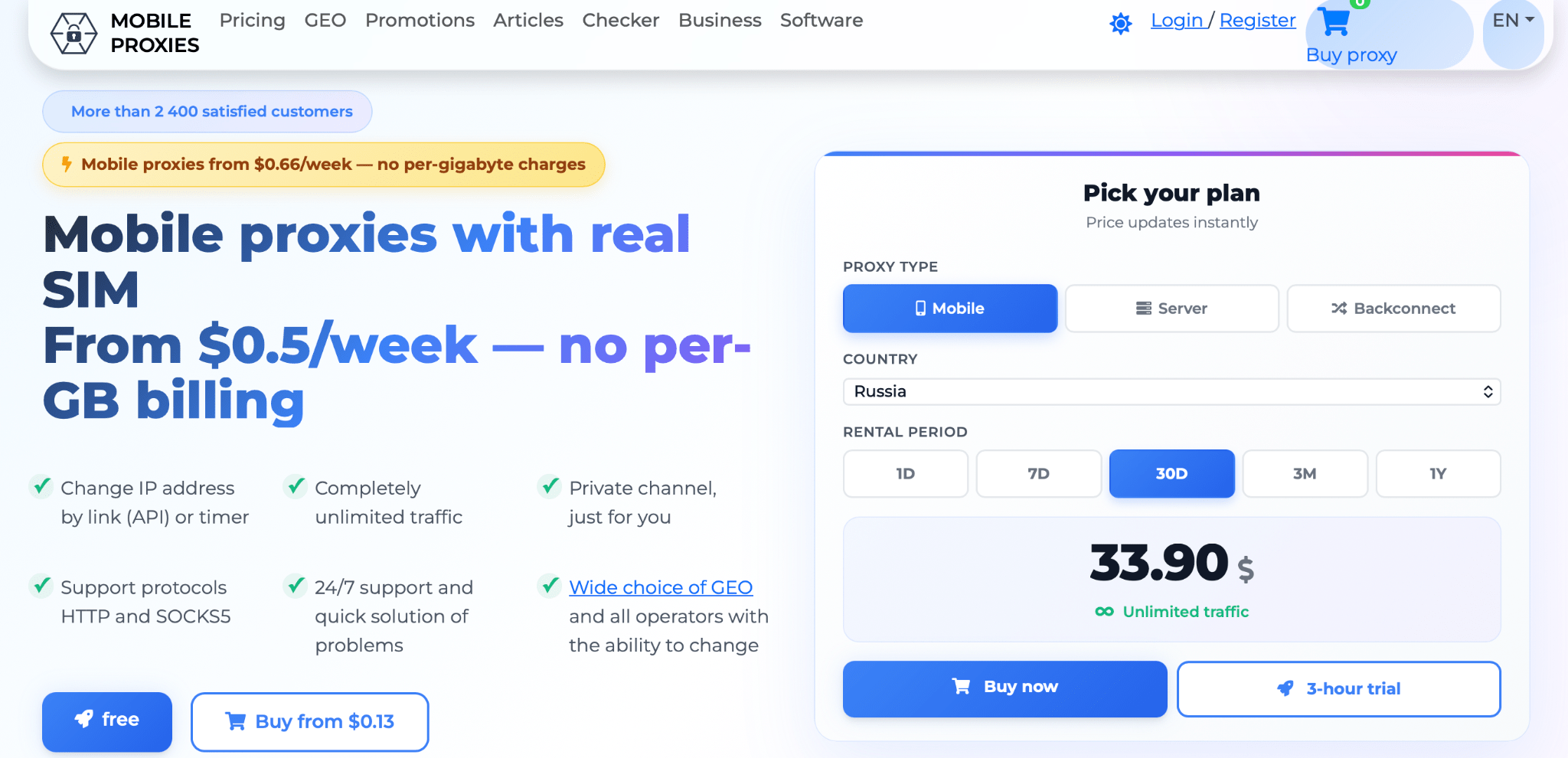
MobileProxy.space is a mobile proxy provider focused on proxies for affiliate marketing, multiaccounting, SMM and automation tasks. The service offers access to more than 236 million mobile IP addresses across 25 countries through a network of over 15,000 mobile devices and supports both API-based and timer-based IP rotation.
Pros:
- Real mobile carrier IPs sourced through GSM operators;
- Unlimited traffic with no per-GB billing;
- Private proxy channels for individual users;
- Fast IP rotation (2–7 seconds);
- Free trial subscription for new users.
Cons:
- Limited GEO coverage compared to larger proxy providers;
- Mobile proxies only, no residential or datacenter options;
- Pricing varies significantly depending on GEO and operator.
Best for: mobile automation, social media marketing and multiaccount management.
Pricing: Mobile proxies start from $0.5/week. Pricing depends on GEO and mobile operators; for example, Spain costs $20/day. All plans include unlimited traffic and a private proxy channel.
Webshare
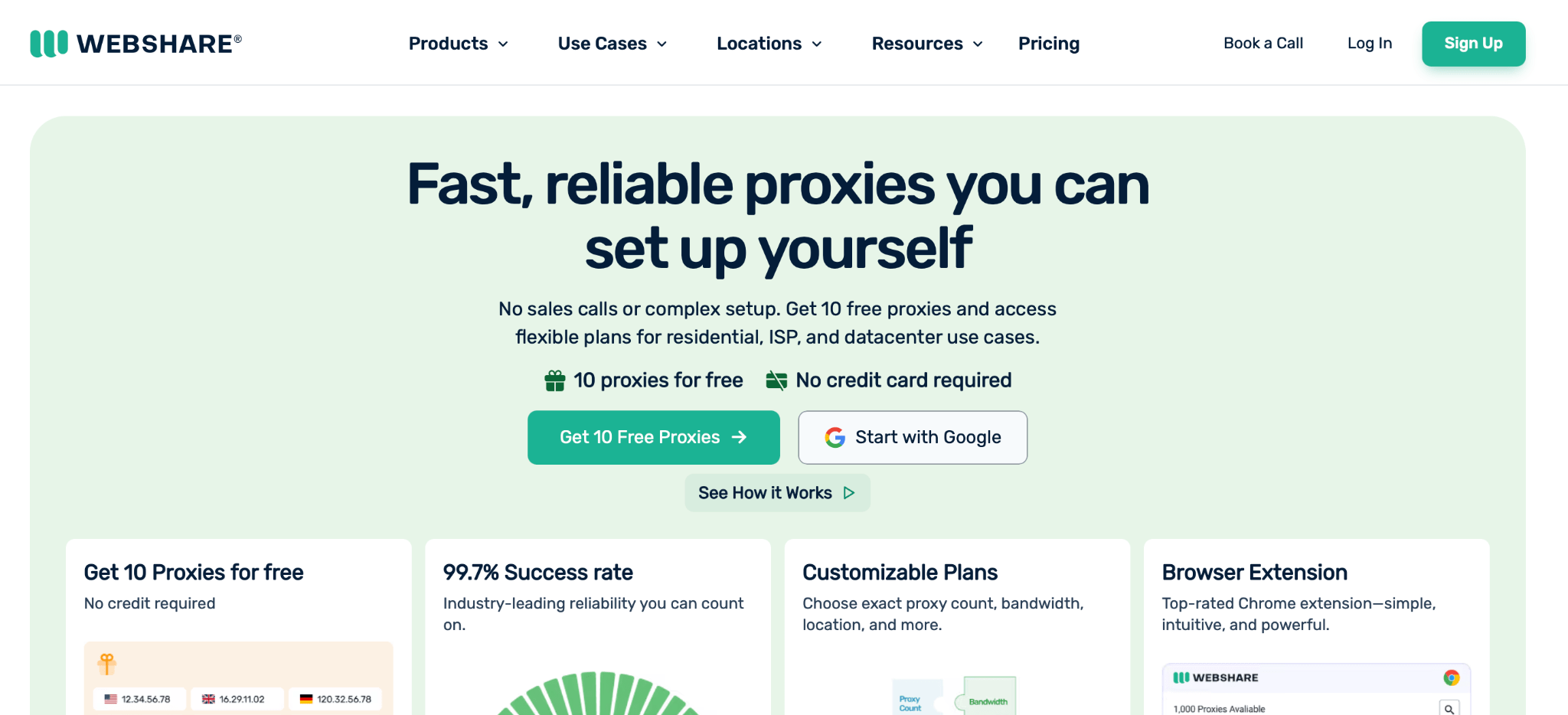
Webshare is a proxy provider focused on affordability and ease of use, offering datacenter, rotating and static (both private and dedicated) proxies. The platform provides access to more than 80 million IPs across 195 countries and is designed primarily for individual users and small-to-medium businesses looking for a simple proxy solution.
Pros:
- Beginner-friendly setup and dashboard;
- Flexible plans with customizable proxy count and unlimited bandwidth;
- Free plan with 10 datacenter proxies and 1GB of monthly traffic;
- Chrome extension for quick proxy management.
Cons:
- Fewer advanced targeting and management features;
- Not as heavily focused on large-scale enterprise use cases.
Best for: beginners, small teams and budget-conscious affiliate marketers.
Pricing: Rotating residential proxies start from $2.75/GB, static residential – from $0.30/proxy, Proxy Server – from $0.0299/proxy.
Comparison Table: Top Proxy Providers at a Glance 📊
The table below highlights the most important parameters for affiliate marketers and media buyers, including pricing, pool size, GEO coverage and available proxy types.
|
Provider |
Starting Price | IP Pool Size | GEO Coverage |
Proxy Types |
| Bright Data | $4.00/GB | 400M+ residential, 1.3M+ ISP | 195+ countries | Residential, ISP |
| Oxylabs | $2.5/GB | 175M+ residential, 2M+ datacenter | 188+ countries | Residential, ISP, Mobile, Datacenter |
| Decodo (Smartproxy) | $2.00/GB | 125M+ IPs | 195+ locations | Residential, Static Residential, Mobile, Datacenter |
| Proxy-Seller | $1.99/0.5GB | 20M+ residential IPs | 50+ locations | Residential, ISP, Mobile, IPv4, IPv6 |
| SOAX | $0.32/GB | 191M+ IPs | 195+ locations | Residential, Mobile, Datacenter |
| IPRoyal | $1.75/GB | 32M+ residential, 4.5M+ mobile | 195+ locations | Residential, ISP, Mobile, Datacenter |
| NetNut | $1.59/GB | 85M+ residential, 5M+ mobile | 195 countries | Residential, Static Residential, Mobile, Datacenter |
| Swiftproxy | $0.7/GB | 80M+ residential | 195+ countries | Residential, ISP |
| MobileProxy.space | $0.5/week | 236M+ mobile IPs | 25 countries | Mobile |
| Webshare | $2.75/GB | 80M+ IPs | 195 countries | Residential, Static Residential, Datacenter |
How to Test a Proxy Before Running Ads
Even the best proxy provider cannot guarantee that every IP address in its pool will perform equally well for all advertising activities. ☝️ That is why it’s worth testing your proxies to identify potential issues in advance and reduce the risk of account restrictions.
One of the first things to check is the reputation of the IP address. Tools such as IPQualityScore, Scamalytics and Pixelscan can help evaluate factors like fraud score, blacklist status and other indicators that may affect how advertising platforms perceive your connection. In general, the cleaner the IP, the lower the chance of triggering additional checks.
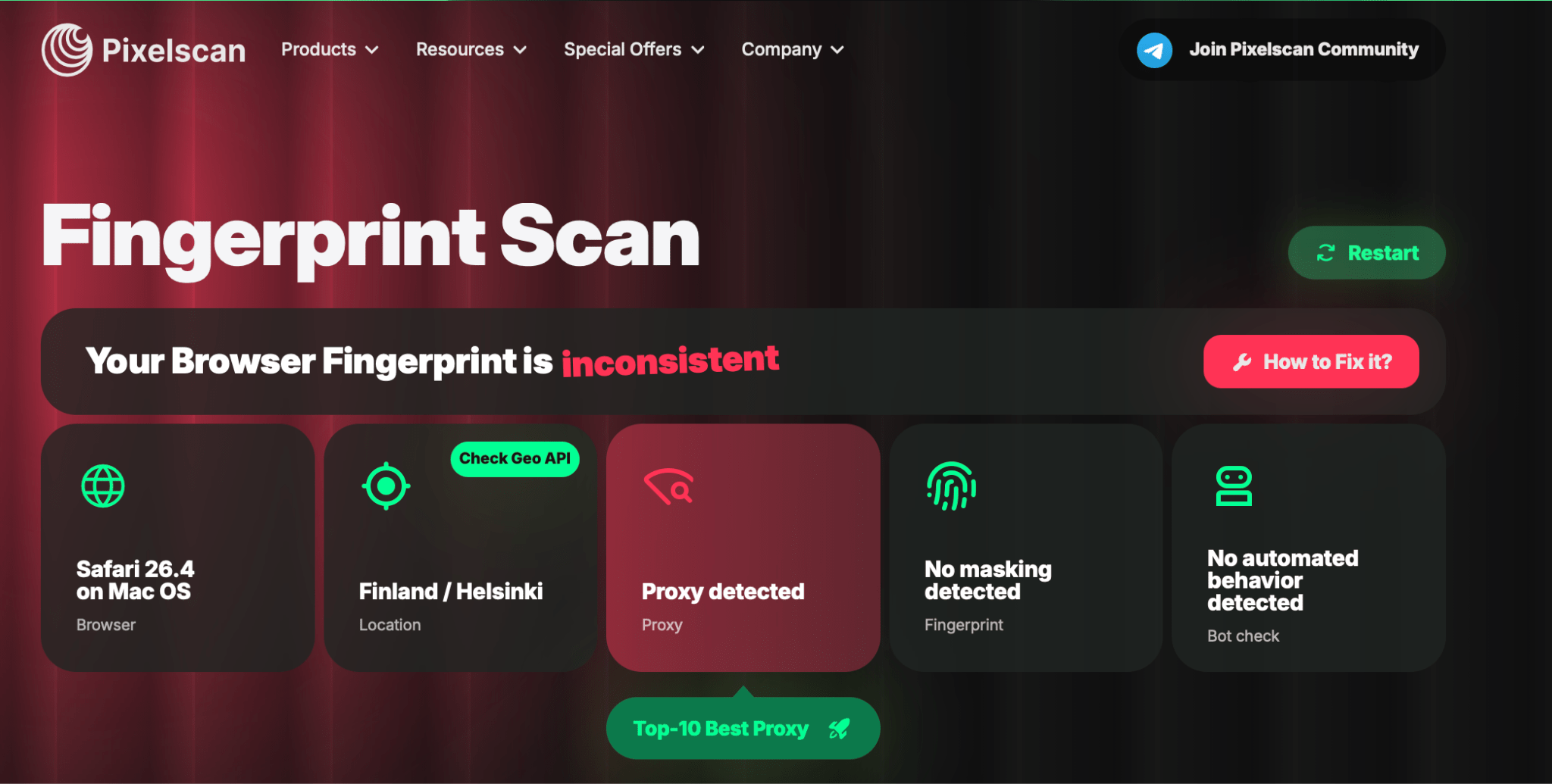
Connection speed and stability are equally important. 🚀 High latency, frequent disconnects or unstable performance can create unnecessary issues when managing ad accounts or running automation tools. Before launching campaigns, it is a good idea to test connection speeds, verify that the proxy matches the intended geo and confirm that services such as BrowserLeaks and IPhey correctly detect the IP location and browser environment.
Proxies and Antidetect Browsers: The Perfect Synergy
Proxies alone are often not enough for efficient account management. While it is technically possible to use proxies in a regular browser, the process quickly becomes time consuming as the number of accounts grows. Users have to configure connections manually, manage cookies, go through KYC verification and make sure different accounts do not overlap with each other for ban prevention.
This is why many affiliates and media buyers combine proxies with antidetect browsers like Dolphin{anty}, AdsPower, Multilogin. 🐬 This setup allows them to create isolated browser profiles with separate digital fingerprints, cookies, local storage and network settings. Each profile can be assigned its own proxy, making it easier to manage dozens or even hundreds of accounts from a single interface.
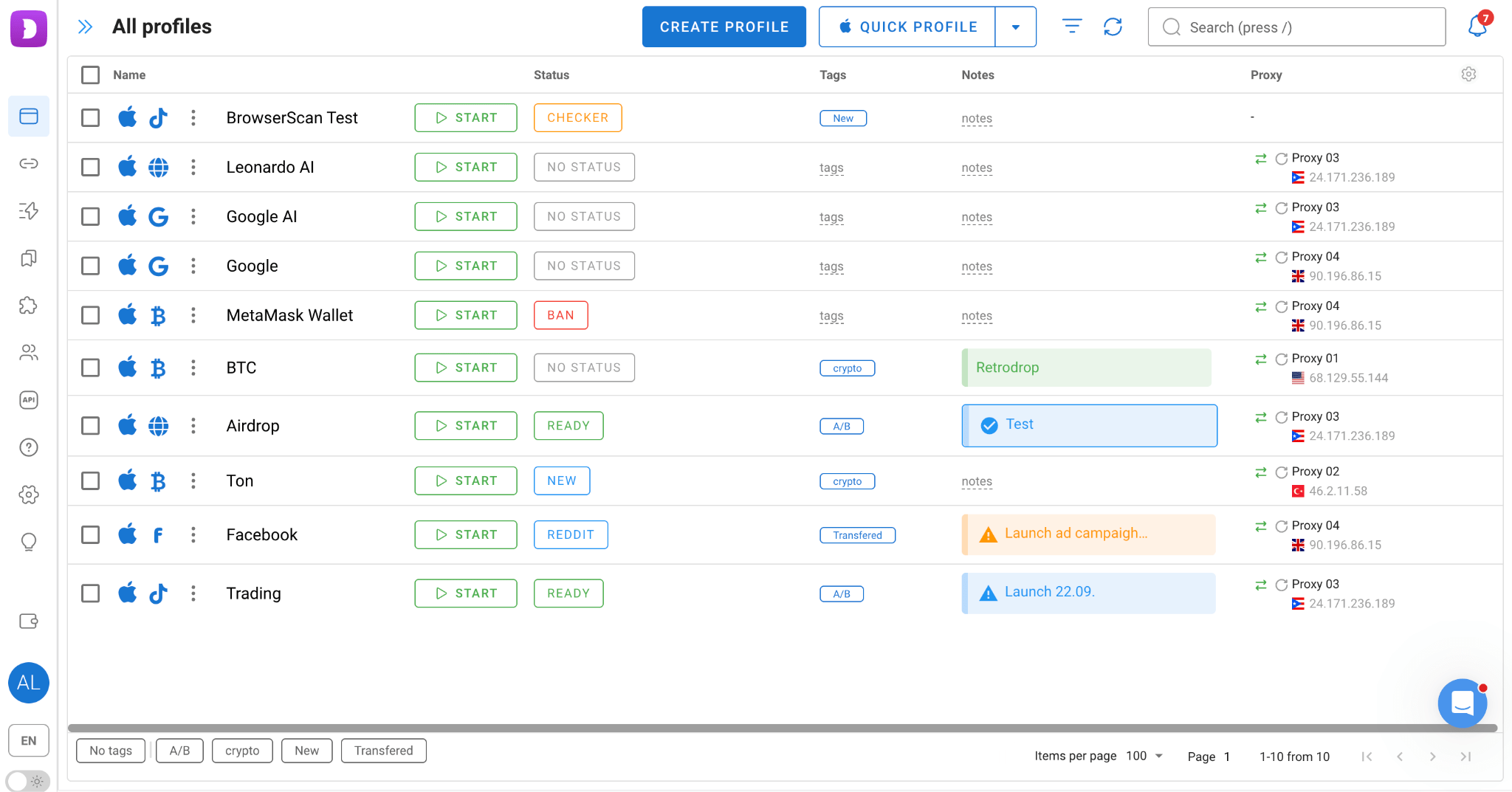
If a proxy is responsible for the IP address, an antidetect browser is responsible for profile management. Together they make it possible to run any number of accounts without constantly switching between devices, browsers and settings. This combination is widely used in affiliate marketing, media buying, e-commerce and other industries where proxy services for multi-accounting are required.
Conclusion
Choosing the right proxy service depends on your traffic source, budget, target geos and the scale of your operations. 🙂 There is no universal solution that works equally well for every workflow. That is why it is important to select a provider that matches your specific needs.
When comparing even the best proxy services 2026, pay attention to factors such as IP quality, available proxy types, geo coverage and connection stability. Before launching campaigns, it is also worth testing proxies for reputation, speed and correct location detection to avoid unnecessary issues with advertising platforms.
Finally, remember that proxies are only one part of the overall setup. For long-term account management and scaling, they are often used together with antidetect browsers and other tools. A reliable infrastructure may require a larger initial investment, but it can save both time and budgets in the long run. 💡
FAQ (Frequently Asked Questions):
What is the best proxy type for Facebook Ads in 2026?
Residential and mobile proxies for FB ads are the most commonly used options. They generally offer higher trust levels and are less likely to trigger platform security checks than datacenter proxies.
Can I use free proxies for affiliate marketing?
Technically, yes, but it is rarely a good idea. Cheap proxies for affiliate marketing often have poor IP reputations, unstable performance and a much higher risk of account restrictions or bans.
How many accounts can I run per one mobile proxy?
There is no fixed number because it depends on the platform, account quality and overall setup. Many marketers use a single mobile proxy for multiple accounts, but proper account isolation remains important.
What is the difference between rotating and sticky sessions?
Rotating proxies automatically change the IP address at set intervals or with every request. Sticky sessions keep the same IP for a longer period, which is often more suitable for account management and advertising activities.
Do I need SOCKS5 for affiliate marketing?
Not necessarily. Most affiliate marketing tasks work perfectly well with HTTP or HTTPS proxies. SOCKS5 can be useful for specific tools, automation software or applications that require broader protocol support.
How to check if a proxy IP is “clean”?
You can use tools such as IPQualityScore, Scamalytics or Pixelscan to evaluate an IP’s reputation. It is also a good idea to verify the GEO, anonymity level and whether the IP appears on known blacklists.