iGaming vertical 2026: Offers, Traffic Sources, GEOs, and Regulations 🎰
The iGaming vertical is one of those affiliate niches where there’s always something happening. Online casinos, sports betting, poker, instant win games, and new gaming formats give affiliates plenty of offers to test, while the market keeps changing with new technologies, payment methods, GEOs, and advertising rules.
For affiliate marketers and media buyers, that’s a lot of opportunity but a lot of things to figure out before launching a campaign. What offers are worth trying out? What sources of traffic can you employ? What GEOs should you begin with? And what should you know about local rules?
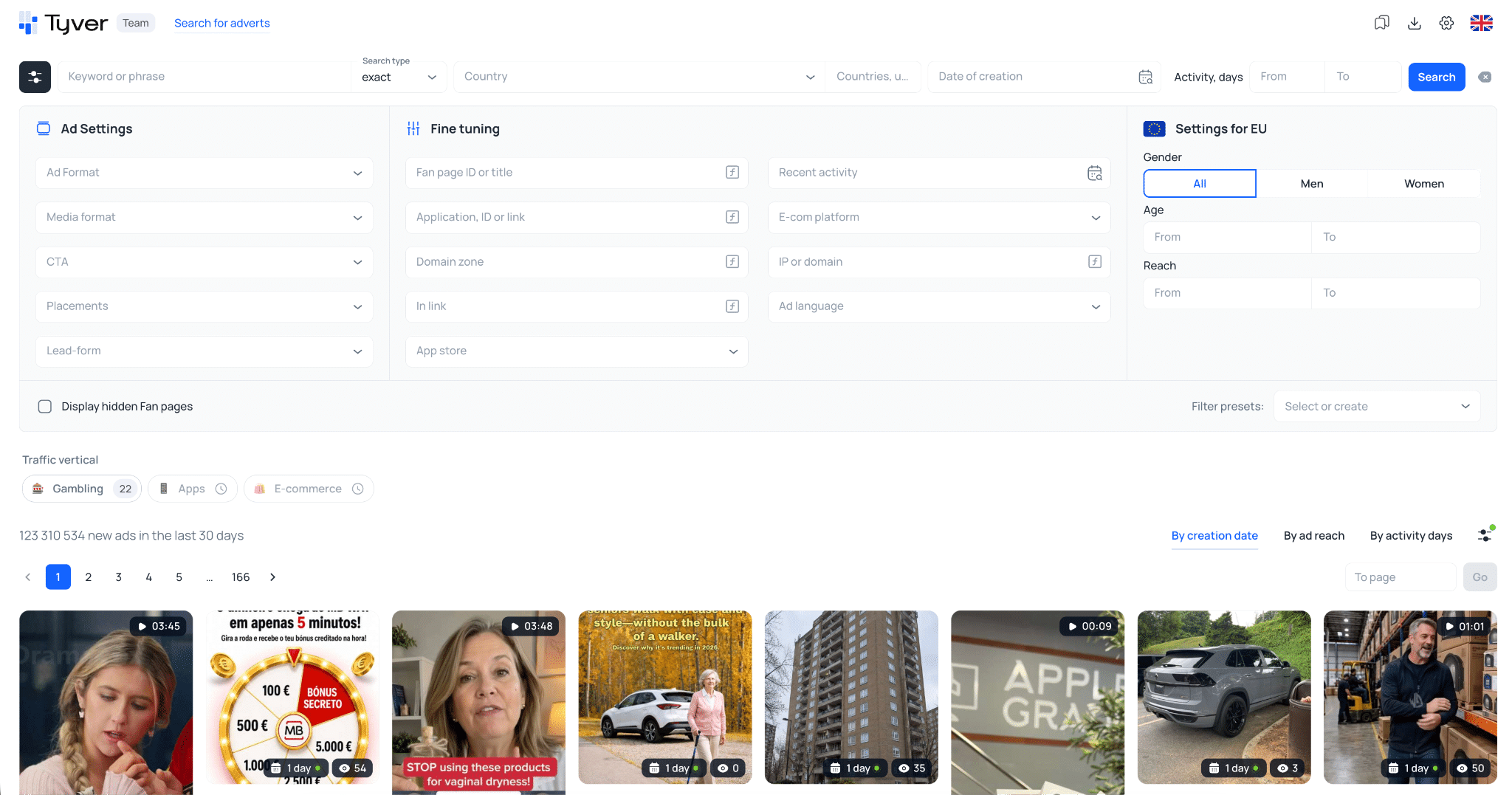
In this guide, we’ll unpack how the iGaming vertical works in 2026 from its primary sub-verticals and affiliate payouts to traffic sources, GEOs, and compliance. We’ll also go through how tools like Tyver can help your research for iGaming ads and how an ad network like Adsterra can help you turn that research into live campaigns. 🔍
What the iGaming vertical covers
iGaming is a term used to describe gambling and gaming activities that occur online, as opposed to in physical venues. Depending on the market and local legislation, this can include online casinos, sports betting, poker, bingo, lotteries, and other games involving real money or prizes.
The iGaming sector has a strong mobile component. Players can access an iGaming platform through websites or mobile apps, place bets, make deposits, and play games without visiting a traditional casino.
Common products in the vertical include:
- Online casino games
- Slots
- Roulette
- Blackjack
- Live dealer games
- Sports betting
- Poker
- Bingo
- Lotteries
- Instant win games
- Instant win scratch cards
- Fantasy and skill-based games, where permitted
The boundaries of the iGaming vertical are not identical everywhere. A game that is classified as gambling in one country can be regulated differently elsewhere. Some markets distinguish between games of chance, skill-based games, social casino products, and betting on sporting events. This is why affiliates should always check the rules of the specific country before launching campaigns.
The market is also highly competitive. Operators compete for new players, while affiliate marketers compete for profitable traffic and attractive offers. As a result, the ability to target the right audience and optimize traffic has a crucial role in iGaming acquisition.
Sub-verticals inside iGaming
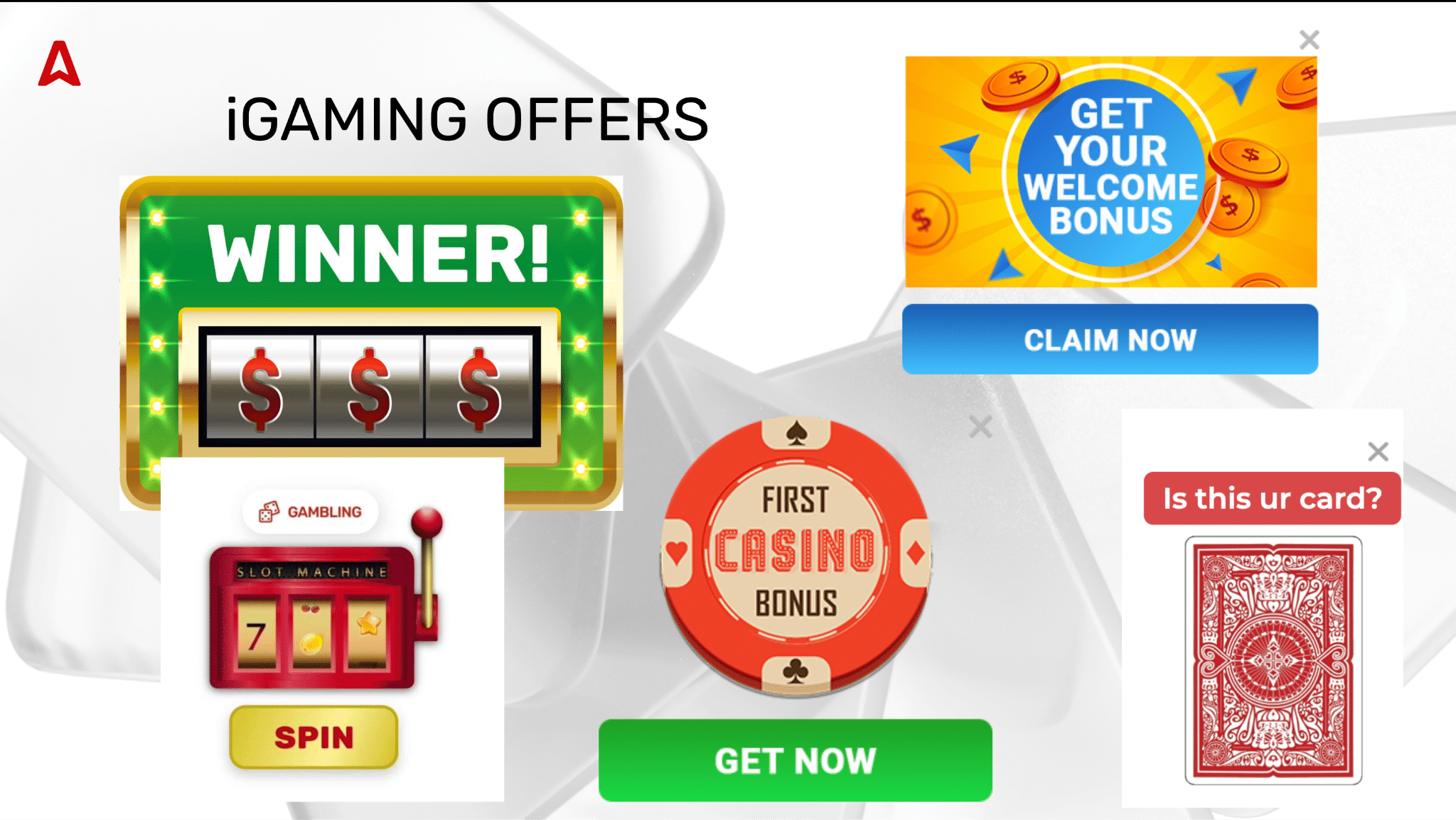
The iGaming vertical is not only online casinos. Here are different kinds of offers, each with its own audience, creative angles and campaign setup. Let’s run through the main ones quickly.
🎲 Internet casinos
When you talk about iGaming the first thing that comes to mind is most likely online casinos. These include roulette, blackjack, baccarat, live dealer games and lots of other casino games.
Slots are particularly popular with affiliates because they offer a lot of scope to experiment with themes, mechanics, bonuses, free spins, jackpots and tournaments. What works for one audience, or GEO, however, may not have the same effect in another place.
⚽ Betting on sports
Another big part of the iGaming industry is sports betting. You can bet on football, basketball, tennis, horse racing and many other sports.
This sub-vertical can be very seasonal. With big sporting events, traffic and interest from players can change, but regular league games can attract a different type of crowd. This is something to keep in mind when planning and optimising campaigns. Adsterra has a regularly updated sports calendar that can come in handy here.
🃏 Poker
Poker has been around the iGaming block for a while, too. Operators usually offer cash games and tournaments, with Texas Hold’em being one of the most familiar formats.
Poker audiences can also be more interested in content than some casino players. Strategy guides, tournament coverage, reviews, and poker-focused websites can all be useful parts of the acquisition mix.
🎟️ Bingo and lotteries
Bingo and lottery offers attract a somewhat different audience from traditional casino and sportsbook products. This group can include online bingo, lottery products, instant win games, and instant win scratch cards.
What’s available can vary quite a bit from one GEO to another, so it’s always worth checking the local rules before building a campaign around a particular product.
🕹️ Other games
The iGaming world doesn’t stop at the traditional formats. Depending on the market, you may also come across fantasy sports, skill-based games, social casino products, and other games that offer prizes.
Whether a particular product falls under the iGaming category from a legal point of view depends on the country and its regulations. So, as usual with iGaming, checking the local requirements before launching is a good idea.
The audience behind iGaming offers
The target audience for iGaming is diverse, so treating all players as one group can make campaign optimization difficult. Casino audiences may be interested in slots or live dealer games. Sports bettors may be highly engaged around particular teams, leagues, or sporting events. Poker players may be interested in tournaments and strategy content.
Mobile users are especially important because many iGaming experiences are designed around smartphones. This makes mobile advertising an important acquisition channel for operators and affiliates.
Potential customer segments include:
- New players searching for an online casino
- Sports fans interested in betting
- Existing casino players looking for new games
- Poker enthusiasts
- Bingo players
- Users interested in instant win products
- Mobile-first audiences
- Users responding to specific bonuses or promotions
The audience can also look very different from one GEO to another. Language, payment methods, popular sports, cultural preferences, and local gambling habits can all influence how people interact with an offer.
That’s why it helps to break campaign data down by country, device, placement, and other available segments instead of looking at the traffic as one big pool. You may find that an offer that looks average overall performs quite differently in a specific GEO or placement.
Test Adsterra’s targeting for iGaming campaigns
How iGaming affiliates get paid
🎯 CPA
CPA stands for Cost Per Acquisition. This means an affiliate receives a fixed payment when a referred user completes a specific action. For many iGaming offers, this action is connected to registration and a qualifying deposit. However, the exact conversion requirements depend on the affiliate program.
📈 Revenue share
Revenue share stands for affiliates earning a percentage of the net revenue generated by the players they refer. The main attraction is the possibility of recurring income if those players continue using the platform. At the same time, the commission percentage, calculation method, payment period, and other conditions can vary significantly between programs.
🔀 Hybrid
Hybrid deals combine CPA and revenue share. An affiliate may receive an initial CPA for a qualified player and then continue earning a percentage of player revenue.
Before choosing an offer, take a moment to check:
- What counts as a qualified player
- Minimum deposit requirements
- Allowed GEOs
- Accepted traffic sources
- Commission structure
- Payment terms
- Negative carryover rules, if applicable
- Brand and creative restrictions
One thing to keep in mind: a higher payout doesn’t always mean a better offer for your campaign. Your actual results will depend on traffic costs, conversion rates, player quality, retention, and how long users stay active.
Which traffic sources convert iGaming offers?
There is no single traffic source that works for every iGaming campaign. The right choice depends on the offer, GEO, audience, budget, funnel, and advertising restrictions. Common traffic sources include paid search, social media, SEO and organic traffic, native ads, push ads, pop ads, in-page push ads, display, video, referral traffic, direct publisher placements.
It’s often worth testing several sources rather than assuming that one channel will work for every offer.
🪟 Pop ads
Popunder campaigns, for example, can send users to a landing page or pre-lander when they open or interact with a website. This makes them an option for testing different offers and GEOs, as long as you monitor traffic quality and campaign performance closely.
Adsterra offers iGaming Popunder inventory across different regions, including Europe and South America, as well as GEOs such as Mexico, Brazil, Indonesia, India, Romania, Germany, the Philippines, Spain, and Argentina.
Of course, the GEO list alone isn’t enough to predict results. Check the available volume, costs, placements, and conversion data before scaling.
🔔 Push ads
Push ads use short messages to catch users’ attention and bring them back to an offer or landing page. Depending on the format and platform, creatives can focus on bonuses, tournaments, new games, or other promotions.
Push notifications and in-page formats have different mechanics. In-page push ads appear directly on a website and can reach users without relying on a traditional browser push subscription.
As always, the creative should match the audience and the rules of the specific traffic source. Clear messaging and realistic claims are especially important in iGaming.
📰 Native ads
Native ads blend into the surrounding website content and can be useful when an offer requires additional context. For example, an affiliate might send traffic to a review, comparison article, or informational pre-lander before directing users to an iGaming platform. Native campaigns can therefore work well for audiences who need more information before registering or depositing.
🔎 Google Ads
Google Ads can provide high-intent traffic, but gambling advertising is heavily restricted.
Google requires certification for relevant gambling categories and requires advertisers to comply with country-specific rules. Gambling ads must target approved countries, avoid minors, and use destinations that meet responsible gambling requirements.
In September 2026, Google expanded its certification requirements across the Gambling and Games policy, with additional requirements around account policy health and domain ownership. This makes Google Ads a channel that requires particularly careful compliance work.
🌐 Ad networks
An ad network can give affiliates and media buyers access to multiple publisher sources through one platform.
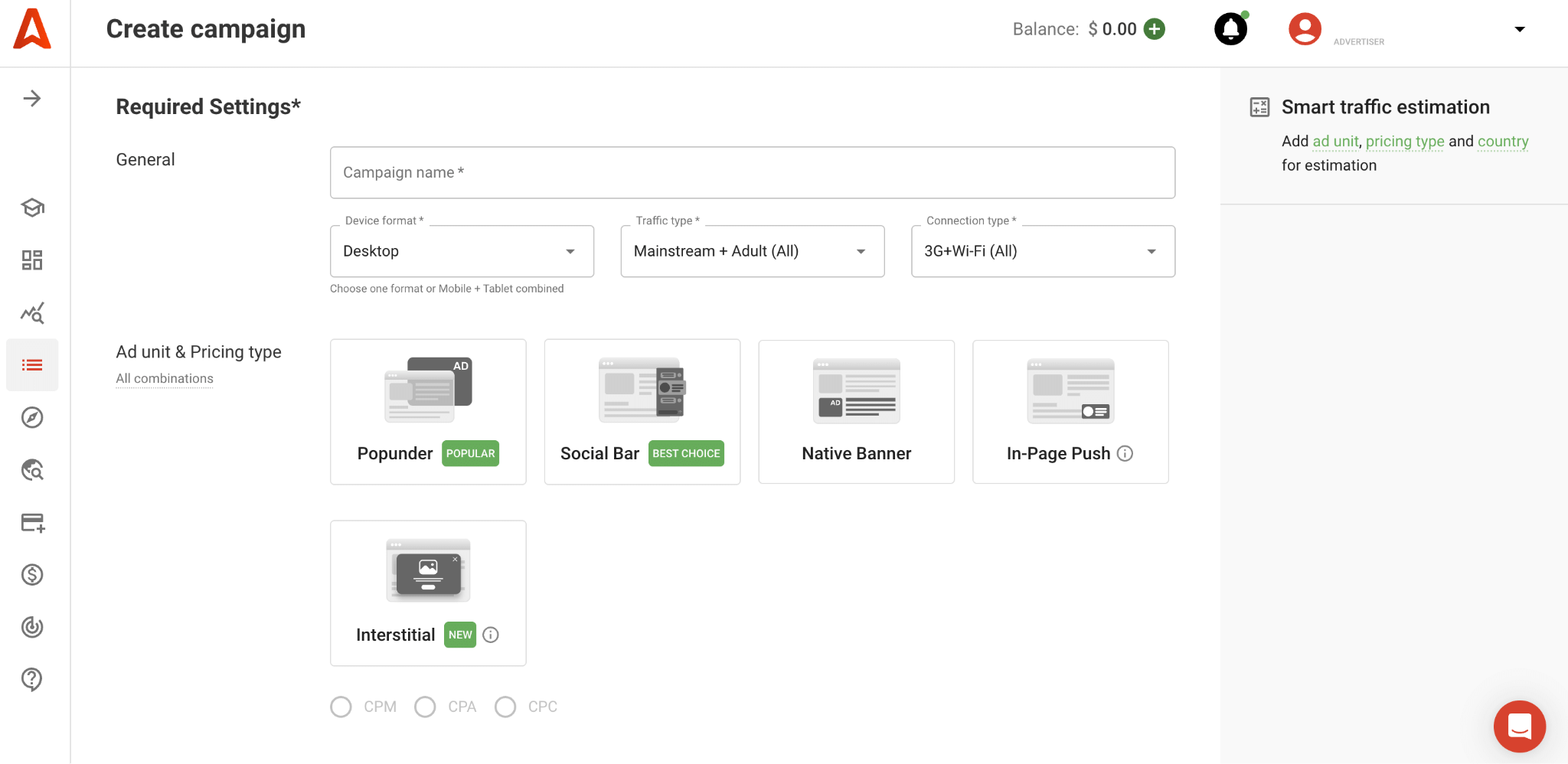
For iGaming campaigns, Adsterra offers several relevant ad formats, including Popunder, In-Page Push/Social Bar, and Interstitial. The platform also provides targeting by GEO, device, operating system, browser, language, connection type, and other parameters. For media buyers testing multiple offers, this can make an ad network a practical way to compare sources and optimize campaigns without negotiating with individual websites.
Adsterra also provides tools such as Smart CPM, CPA Goal, Custom Bid, and Multi-Event Tracking. These features allow advertisers to monitor different stages of the user journey and adjust bidding or placement strategy as data accumulates.
Adsterra’s Partner Care approach is another practical point to consider, especially if you’re testing a new vertical or need help navigating campaign setup. The team provides personal managers and live chat support for advertisers at different experience levels.
Best GEOs and tiers for iGaming campaigns
GEO selection can make a real difference to the economics of an iGaming campaign. The same offer can perform very differently from country to country as it is contingent upon the audience, competition, payment habits and local regulations.
Affiliates often categorize markets as Tier 1, Tier 2, or Tier 3 to evaluate them against each other using criteria such as purchasing power, traffic costs, and competition. But useful as these categories can be for planning, they must never substitute for actual campaign data.
Expensive traffic, tight regulation, and strong player value are all features of a Tier 1 country. A lower-cost GEO can offer cheaper traffic but different player economics.
Before choosing a GEO, ask yourself:
- Does this offer exist in the country?
- Does the operator hold a license in that location?
- Which gambling products are legal?
- What payment methods do users want?
- Are the creatives localized?
- How competitive is the market?
- How much relevant traffic is available?
- Can the offer support the expected acquisition cost?
Do not select a GEO solely because it has a large market. Check whether the specific iGaming platform, offer, and traffic source can legally and commercially operate there.
Rules, restrictions and moderation you can’t ignore
Compliance is an integral part of the iGaming industry. Operators, affiliate programs, advertising platforms, and publishers can all set their own rules. Furthermore, local governments and regulators may impose additional requirements to run iGaming campaigns.
Important areas are:
- Legal gambling age
- Licensing
- Geographic restrictions
- Advertising Disclosures
- Responsible Gambling Information
- Creative limitations
- Bonus and Promotional Claims
- Landing page requirements
- Brand usage
- Limitations on targeting minors.
Google’s current policy requires gambling ads to comply with local gambling laws, target approved countries, include responsible gambling information on relevant landing pages, and never target minors.
Advertisers must also keep their licenses up to date. Google states that certification may be jeopardized if required licensing expires, is suspended, or is otherwise no longer valid.
‼️ IMPORTANT! Compliance can have an impact on brand reputation, affiliate relationships, and the long-term ability to acquire players — the advice is simple: pay attention to the regulations.Requirements to start with iGaming offers
Getting started in the iGaming vertical requires more than simply choosing an offer and buying traffic. You also need to understand the funnel, set up tracking, and make sure your campaign follows the relevant rules.
Here’s a practical checklist to help you get started.
1️⃣ Choose a compliant offer
Check the offer’s accepted GEOs, traffic sources, conversion requirements, payment model, and creative rules. Taking a little time to review these details can save you from spending your budget on traffic that won’t qualify or can’t be accepted.
2️⃣ Understand the funnel
Map out what happens after a user clicks your ad. A typical iGaming funnel might look like this: ad → pre-lander → registration → verification → deposit → player activity
Some offers may have additional steps. The important thing is to understand which action you’re actually being paid for. The further you go beyond a simple click or registration, the more attention you should pay to traffic quality and user intent.
3️⃣ Set up tracking
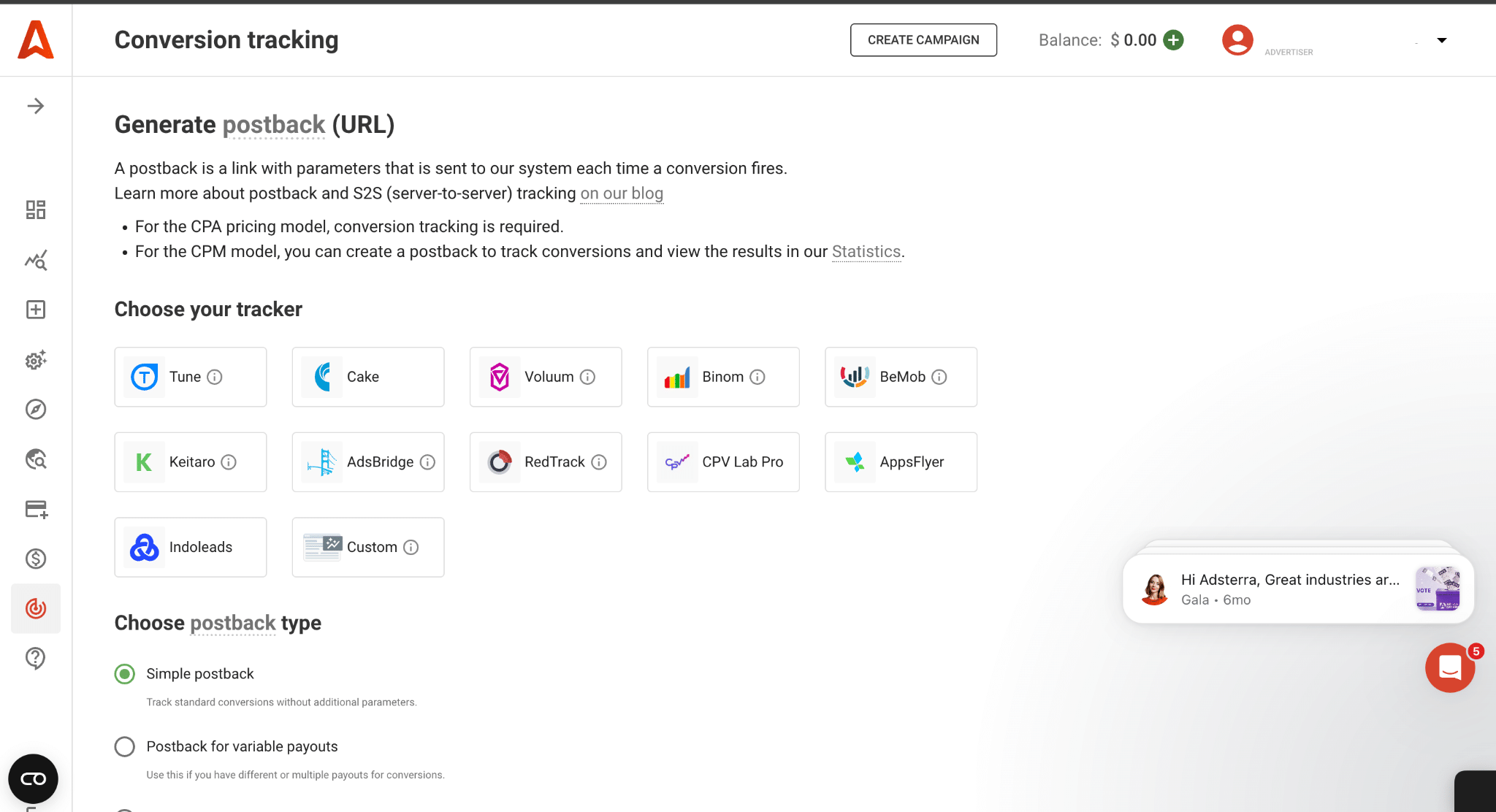
Track clicks, registrations, deposits, and other important events. For instance, Adsterra’s Multi-event tracking can help identify where users leave the funnel. This is particularly useful when comparing traffic sources because a campaign can generate many registrations while producing relatively few depositing users.
4️⃣ Select the right ad formats
There’s no need to use the same ad format for every campaign. Different offers and audiences may respond to different approaches.
- 🪟 Pop ads can be useful when you want to test direct-response campaigns and access larger traffic volumes.
- 🔔 Push formats can highlight bonuses, tournaments, and other timely promotions.
- 📰 Native ads can work well with reviews, comparisons, and educational pre-landers.
- 🖥️ Interstitials can offer a more noticeable user experience, depending on the placement and campaign setup.
Match the ad format with the user journey rather than use one format for every offer.
5️⃣ Start with controlled tests
It can be tempting to scale as soon as you see a few conversions, but it’s usually better to understand the campaign economics first.
Test a manageable combination of GEO, offer, ad format, and traffic source. Once you have enough data, look beyond the overall numbers. Break down performance by placement, device, country, and other available segments to find promising pockets of traffic and identify placements that may be consuming budget without bringing meaningful results.
6️⃣ Choose an ad network that fits your needs
If you’re working with paid acquisition, an ad network can give you access to multiple sources through one platform. This can make testing easier, especially when you’re comparing different GEOs, placements, and formats.
Adsterra is one option for advertisers and affiliates working in the iGaming vertical. The ad network supports formats such as Popunder, Social Bar/In-Page Push, and Interstitial, alongside targeting and optimization tools for managing campaigns across different GEOs and placements.
So, what does the whole process of launching an iGaming campaign look like? A practical workflow might look like this:
- 🔍 Research creatives with Tyver
- 🎯 Choose an offer
- 🚀 Build and test your campaign with Adsterra
- 📊 Track key events
- 📈 Optimize based on the data
You don’t need to have everything figured out from day one. Start with a clear setup, keep an eye on the numbers, and use each test to learn a little more about what works for your offer and audience.
Bottom line
The iGaming industry can look a little overwhelming at first, with different offers, GEOs, traffic sources, and rules to keep track of. You don’t have to figure everything out at once. Start by understanding your audience and offer, check the local requirements, and test your traffic and creatives with a clear plan.
🚀 Tools like Tyver can help you research what other advertisers are running and spot creative ideas worth exploring, while an ad network like Adsterra can help you turn those insights into real campaigns. With enough testing and careful analysis, you can gradually build a better understanding of what works for your offer and audience in the iGaming vertical.